My dog pulls on the Leash…So What Do I Do Now???

My Dog Pulls on the Leash… So What Do I Do Now?
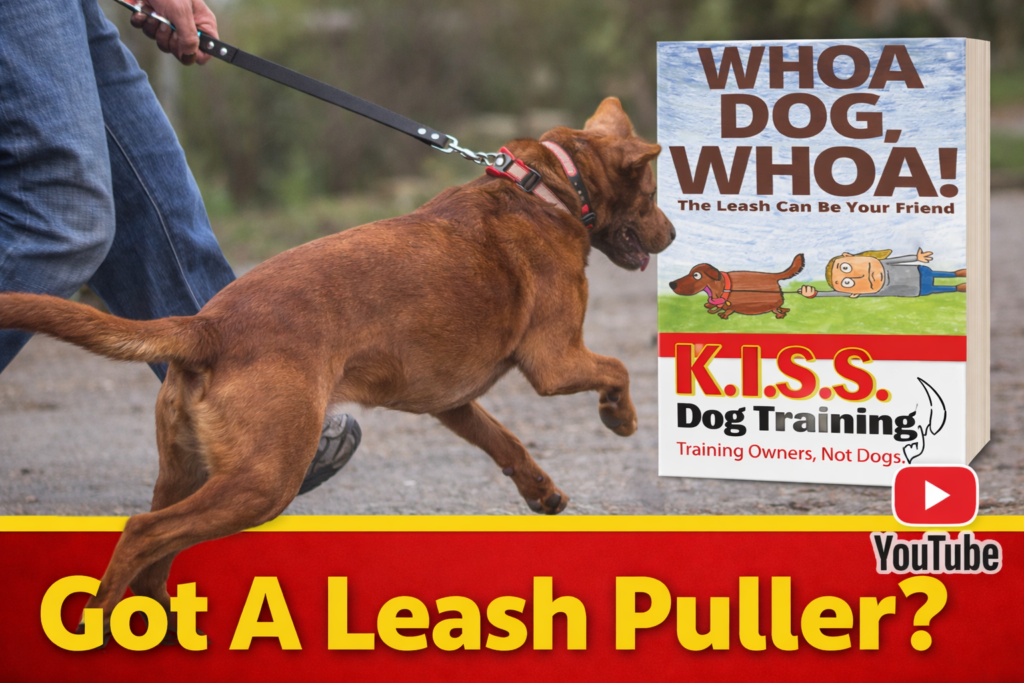
Several months ago, I wrote an article explaining why dogs pull on the leash. It was well received, but many readers pointed out something important: understanding why doesn’t help much if you’re already dealing with a dog who drags you down the street every day.
After a number of reminders (thank you for those), it’s time to talk about the next step — what to actually do when leash pulling is already a problem.
🐾 Let’s Look at the Real Reward
Pulling works because it pays.
We already know your dog pulls. But let’s dig a little deeper and ask a more useful question:
What is your dog being rewarded for when he pulls?
The answer is irritatingly simple. The reward is the walk itself.
From your dog’s perspective, pulling is just the fastest way to get from point A to point B. There’s no dominance, no power struggle, and no grand plan to take over the world. That idea is just plain silly.
Your dog is here. He wants to be there. You happen to be connected by a goofy rope thing. So off you go — together.
At its core, this isn’t an attitude problem. It’s a training gap. Your dog has never been taught that paying attention to you is more valuable than paying attention to the environment. And let’s be honest — the world is full of interesting smells, sounds, and distractions.
🐾 The Walk Is the Reward
If pulling happens and the walk continues, pulling is reinforced.
Now let’s ask another important question:
If the walk itself is the reward, what do we do when the behavior during the walk is inappropriate?
We already know dogs only do what is rewarding. So if pulling happens and the walk continues, pulling has just been reinforced.
That means the very first rule of leash training is this:
If your dog pulls, the walk stops.
This is one of the simplest and most effective tools you have. But it only works if you don’t forget the other half of the equation.
Stopping the walk tells your dog what you don’t want.
It does not automatically teach him what you do want.
And without that piece, it’s going to be very hard to get any level of reliability.
If your dog pulls, the walk stops.
🐾 What We Want Instead
A dog that is paying attention is not pulling.
The goal is simple: we want your dog to pay attention to you while walking.
This isn’t complicated. A dog that is genuinely paying attention to their handler is not pulling — that’s just basic physics.
So now we have two things:
- We stop the walk when pulling happens.
- We teach the dog what should happen instead.
The question becomes: how do we teach that attention?
🐾 Start With “Watch Me” (Off Leash First)
Attention is a skill — teach it without pressure.
Begin by teaching a solid Watch Me command:
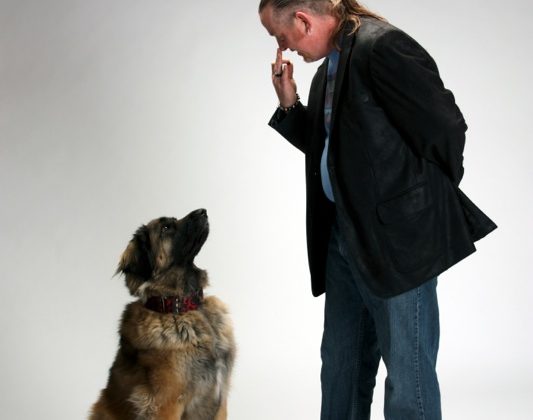
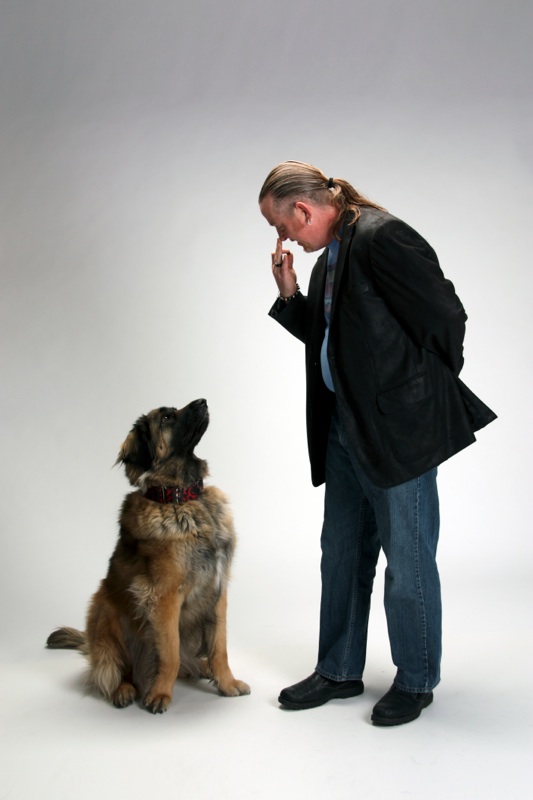
- Point to your nose
- Your dog makes eye contact
- You reward that contact
Once your dog understands this, it’s time to make things more interesting.
Turn your back on your dog and wait.
Within moments, your dog will come around to see what you’re doing. The instant he looks at you, reward generously. Then turn away again.
Before long, this becomes a game. Your dog learns that seeking you out pays well.
This exact exercise is demonstrated in my Turnaround Game video on my YouTube channel, where you can see how attention is built without leash pressure and why this game becomes the foundation for loose leash walking.
At this stage, there should be no leash involved.
Watch it here: Turnaround Game video
🐾 Add Movement and Expect More
Let the dog figure it out.
Once the game becomes easy, it’s time to raise the bar.
Instead of just turning your back, take one giant step away and wait. Your dog will still come around and look at you — but now, looking isn’t enough.
Be patient. Don’t ask for anything.
If your dog has learned that good things happen after sitting, he will eventually offer a sit in front of you. That moment matters. Reward it.
What you are teaching:
- When you stop moving, your dog comes around
- Faces you
- Sits
- And waits for what’s next
You are not forcing this behavior — you are allowing your dog to discover it.
🐾 Build Reliability Before Adding the Leash
Progress beats perfection.
Practice this pattern with different numbers of steps and in different directions. Aim for reliability, not perfection. If you’re getting this right about 85% of the time, you’re doing great.
Once this is solid, return to the Watch Me game — this time with a leash attached. Slowly increase steps, vary directions, and continue reinforcing attention and that front-facing sit.
🐾 Take It Outside (With Realistic Expectations)
The real world changes everything.
Up to now, you’ve been working in a low-distraction environment. The outside world is different.
Expect to go backwards a bit when you first step outside. That’s normal.
Here’s the real secret to loose leash walking:
Pay attention.
Most people mentally check out on walks. They get bored, stop engaging, and the pulling returns.
Instead:
- Every 50–75 feet, stop and practice that front-facing sit
- Mix in other commands
- Keep your dog mentally engaged
And yes — bring treats.
You are asking your dog to choose you over a world full of sights, sounds, and smells. Give him a reason.
Pay attention.
🐾 If Pulling Is Already a Long-Standing Habit
Change takes time.
If your dog has been pulling for a long time, this won’t be an overnight fix. You’re changing a behavior that has worked well for them in the past.
There is no quick fix — but there is a clear path forward.
With consistency, patience, and realistic expectations, leash walking doesn’t have to be a battle. It can become a cooperative skill built on clarity, not force.
🐾 Want to Go Deeper?
Some problems need more structure.
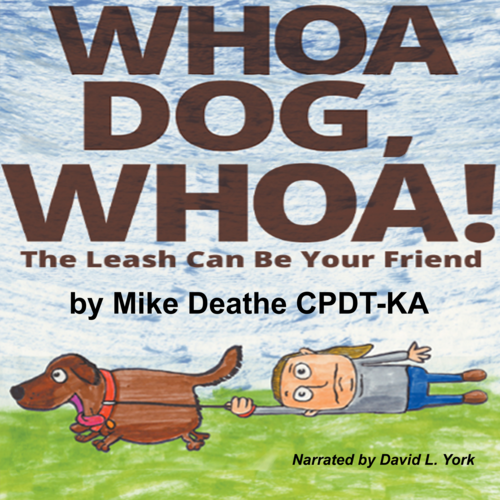
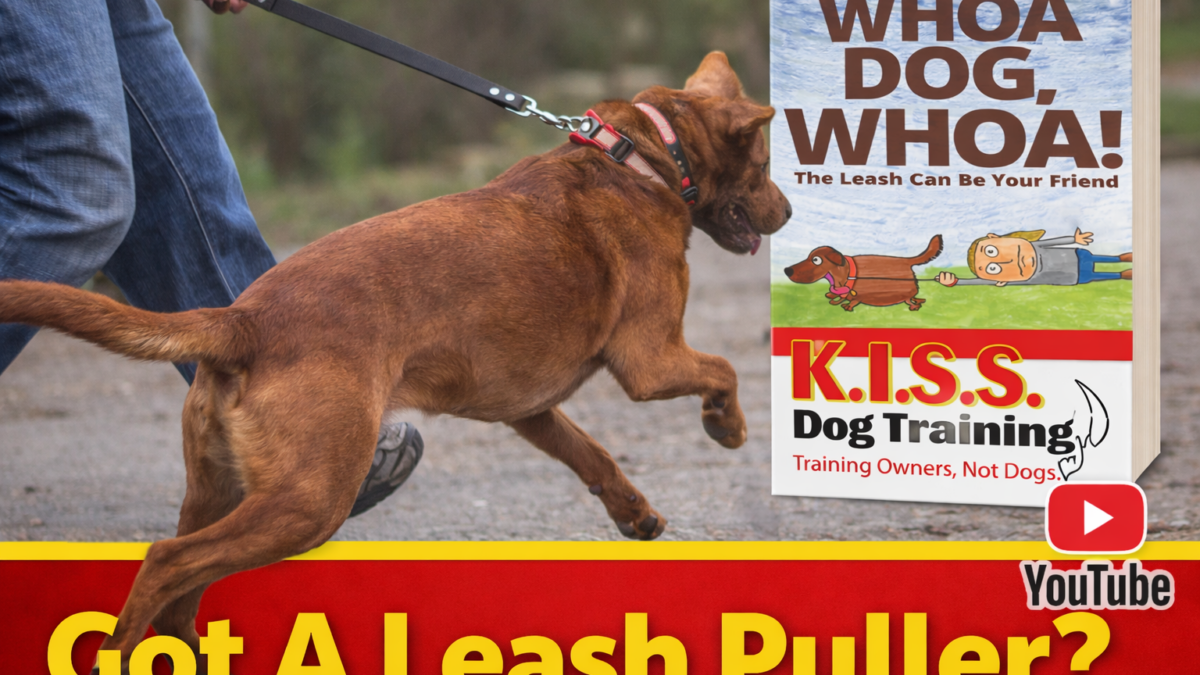
If leash walking has been an ongoing struggle, I go deeper into structure, attention, and step-by-step exercises in my book Whoa Dog, Whoa! The Leash Can Be Your Friend.
The book expands on the concepts in this article and helps owners build consistency without force or frustration.
Book link: Whoa Dog, Whoa! The Leash Can Be Your Friend
🐾 Need Hands-On Help?
Environment and timing matter.
If you’re looking for in-home guidance, working with an experienced Dog Trainer in Kansas City or Dog Trainer in Shawnee can make leash skills much easier to teach correctly. Real-world distractions often require real-world coaching.
Service pages: