The 3 D’s of Dog Training: Why Most Training Falls Apart (And How to Fix It)
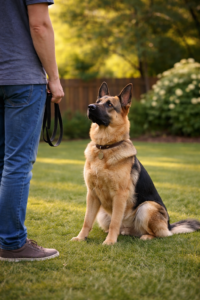 The 3 D’s of Dog Training: Why Most Training Falls Apart (And How to Fix It)
If you’ve ever felt stuck teaching your dog a simple cue like sit, down, stay, or come, there’s a good chance you skipped a step—not because your dog is stubborn, but because the training progressed out of order.
No matter what behavior you’re teaching, success always comes back to the same three variables:
Duration. Distance. Distraction.
These are the three D’s of dog training, and every reliable behavior your dog performs depends on introducing them in the correct sequence. Skip one, rush one, or stack them too early, and training tends to fall apart fast.
—
The Foundation: Duration
Duration is the length of time your dog can hold a behavior reliably before you give the release cue.
Think of duration as the bricks and mortar of training. Without it, nothing else holds together. Distance and distraction don’t strengthen a behavior—they test it. If duration isn’t solid first, the rest collapses.
Foundation matters. Just like the story of the Three Little Pigs, if the base is weak, the house doesn’t survive the first challenge.
When I teach puppies or beginner dogs, I start with:
- Watch me
- Sit
- Down
- Stay
All of these begin with duration at close range.
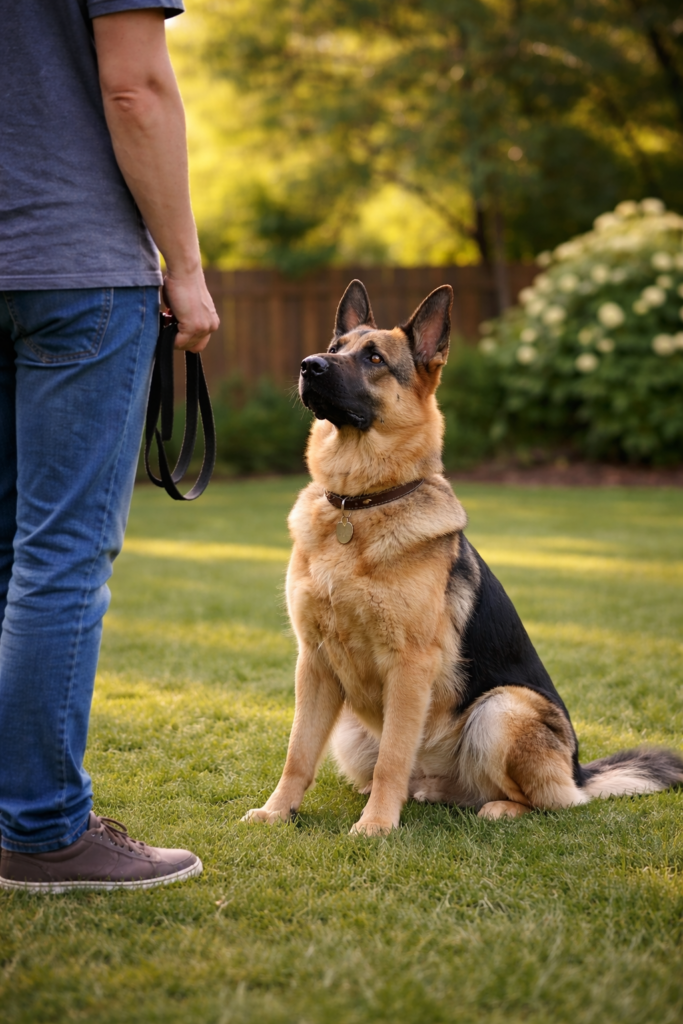
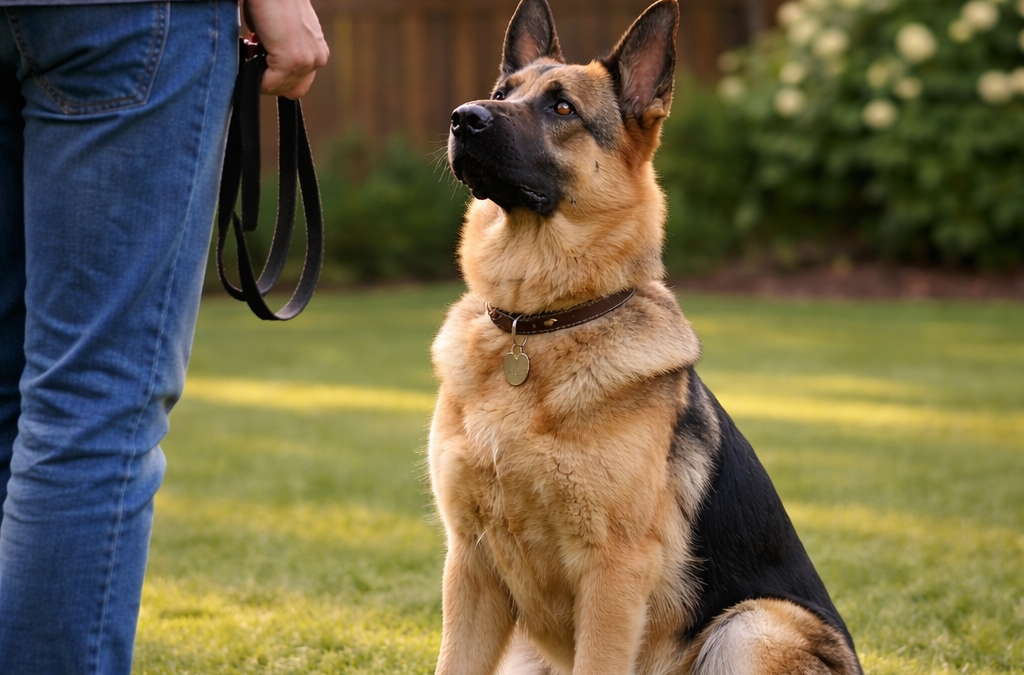
For example, when teaching a stay, I want the handler standing no more than two feet away, focusing only on how long the dog can hold position. No stepping away. No turning your back. No added movement yet.
Once the dog can reliably hold that position for 30–45 seconds, calmly and consistently, then—and only then—do we consider moving on.
—
The Second Layer: Distance
Distance means adding physical space between you and your dog after duration is already reliable.
This is where many people get into trouble. It’s tempting to jump from two feet to six or eight feet because it feels efficient. In reality, it creates setbacks.
When dogs fail, training doesn’t pause—it regresses. That’s how you end up with the familiar pattern of two steps forward and three steps back.
Distance training requires two things from the human side:
- Simplicity
- Patience
Those two traits (or the lack of them) are the reason my business is called Keep It Simple Stupid Dog Training.
—
The Rule of 2
When adding distance or duration, I use what I call The Rule of 2.
The core idea is simple: you change things in increments of two, every two days.
Here’s what that looks like in practice:
- Start where your dog is already successful
- Hold that level for two full days
- Increase by two units (feet for distance, seconds for duration)
- Repeat
For example, with distance:
- Two days at 2 feet
- Two days at 4 feet
- Two days at 6 feet
- And so on
If your dog struggles at a new level, don’t push through it. Drop back to the previous distance, stabilize success, and then try again.
The same rule applies to duration—add two seconds every two days, not ten all at once. Training works best when you build forward on success, not when you rush and create failures.
—
Why Rushing Always Backfires
When owners push too far, too fast, failures happen—and those failures usually get blamed on the dog.
- “Stubborn.”
- “Dense.”
- “Doesn’t listen.”
In reality, most breakdowns come from stacking distance or distraction on top of a behavior that wasn’t ready yet.
Keeping training simple isn’t dumbing it down—it’s respecting how learning works.
—
What About Distraction?
Distraction is the final—and hardest—piece of the puzzle.
It’s also the biggest reason problem behaviors show up once dogs leave the living room and enter the real world.
That topic deserves its own discussion, and it’s where many behavior issues truly begin.
In the next post, we’ll break down distraction and why it’s the number one cause of training failures.
—
When You Need Help Structuring Training
If you’re working through these concepts and things still feel messy, that’s often a sign the sequence needs tightening—not that you or your dog have failed.
As a Kansas City dog trainer, a large part of my work involves helping owners slow things down, rebuild foundations, and put clear daily routines in place so training actually sticks. This article is part of our Kansas City–focused training library, built to help local dog owners understand how training actually works before problems spiral.
If your dog’s stay falls apart when you add distance, or recall disappears the moment distractions show up, it’s usually because duration wasn’t truly solid first.
Learn more about working with a Dog Trainer in Kansas City, or if you’re ready to talk through your dog’s situation directly, visit the Contact page to get started.
Winner – Best Dog Trainer in Johnson County (2023, 2025)