
A Dog Trainer in Shawnee KS Helps With 7 Proven Ways To Prep Your Dog for Visitors and Holidays Without Stress
A Dog Trainer in Shawnee KS Helps With 7 Proven Ways To Prep Your Dog for Visitors and Holidays Without Stress
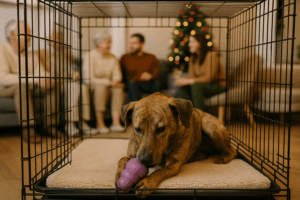
When the holidays roll around, your home fills with people, movement, food, noise, and excitement. While that can be enjoyable for humans, it can be confusing and stressful for dogs. Many families see a spike in jumping, barking, pacing, or door chaos during this season.
You’re not alone — we see this every year. At K.I.S.S. Dog Training, we help families prepare their dogs for these moments using simple, positive, realistic training approaches that work in real homes. With the right preparation — and maybe some in-home dog training in Shawnee — your dog can remain calm, confident, and relaxed even when the house is buzzing with energy.
Why Holidays Are Hard for Dogs
During the holidays, a dog’s normal routine gets disrupted:
- Extra people in the home
- Louder environments
- More food smells
- New voices and behaviors
- More movement and unpredictability
- Less structure
Dogs don’t misbehave because they’re “bad.”
They’re simply overwhelmed.
That’s why training before the event makes all the difference.
Step 1: Teach “Doorbell Means Crate” — Not Door Chaos
Instead of trying to control your dog at the door while guests enter, we teach something much simpler and more natural:
When the dog hears the doorbell → they go straight to their crate → and get a reward.
Training the behavior looks like this:
- Play or simulate a doorbell sound
- Cue “crate”
- Dog goes to crate → reward immediately
- Repeat until the behavior becomes automatic
Then, when guests actually arrive:
- Doorbell rings
- Dog goes to the crate
- Reward again
- Dog remains in crate until calm
While the dog is in the crate, using long-lasting interactive treat toys (like a stuffed Kong) creates a positive association with settling in the crate, occupies the mind, and can help your dog relax. Often, this mental engagement leads to a nap — which is the best quiet behavior of all.
If your dog breaks out, jumps on a guest, or rushes the door:
- Calmly redirect them back to the crate
- Reward
- Allow a short “reset” period
We don’t punish the excitement — we redirect it into calm routine.
The crate becomes a cue for settling.
Step 2: Put the Crate in the Living Space — Not a Back Room
The crate should be placed:
- In the main living area
- Where normal household activity happens
- Where the dog can still observe
- Where they feel included and connected
While your dog is in the crate, providing treat-based enrichment toys like Kongs or safe chew items will help create a positive emotional association with being in the crate during activity. These toys help the brain relax, keep the dog happily occupied, and often result in a restful nap. It’s a win-win for the dog and for visitors — the dog remains calm, and the humans get to move freely without disruption.
We’re not isolating the dog — we’re normalizing calm behavior in everyday life.
Step 3: Teach Guests How to Interact With Your Dog
Guests don’t always understand how dogs communicate, so we guide them.
Guest rules:
- Let the dog come to YOU
- Don’t reach for the dog
- Don’t lean over the dog
- Don’t hug the dog
- Avoid direct eye contact at first
- Don’t feed scraps or treats
- If the dog goes to their crate, leave them alone
The best approach is to play hard to get:
- Act boring and neutral
- Don’t greet the dog first
- Don’t get excited
- Let them approach at their pace
When the dog chooses to approach calmly, we reward that choice.
We reward good decisions — we don’t push dogs into uncomfortable interactions.
Step 4: Reward Calm — Not Hyperactivity
We reinforce what we want more of.
That’s the essence of positive reinforcement.
Reward when your dog:
- Lies quietly in the crate
- Observes calmly
- Doesn’t charge the door
- Initiates a calm greeting
Avoid accidentally rewarding:
- Jumping
- Pawing
- Whining
- Begging for attention
Behavior you reward = behavior you’ll see again.
Step 5: Know When to Step In
Your dog’s body language matters.
Signs your dog is uncomfortable:
- Stiff posture
- Tucked tail
- Lip licking
- Turning head away
- Freezing
- Whale eye
- Low growling
They are telling you:
“I’m uncomfortable with this situation.”
At this point:
- Remove pressure
- Give space
- Let them decompress
This is where working with a Shawnee dog behavior specialist can help you interpret subtle emotional signals.
Step 6: Taking Your Dog to Someone Else’s Home
When visiting another home:
- New smells
- New layout
- New people
- New rules
- New boundaries
- New energy
So you MUST:
✔ Bring your crate
✔ Set it up in the main living area first
✔ Provide familiar, long-lasting treat toys
✔ Reward crate use
Mental enrichment helps the dog relax — and often leads to a nap.
If your dog appears overwhelmed —
- panting
- pacing
- whining
- hiding
- jumping
- barking
— then it’s appropriate to move them to a quieter, private room with their crate to reset.
This is not punishment.
It is emotional protection.
You are telling your dog:
“You don’t have to handle this — you can rest.”
Step 7: Practice Makes Progress — Don’t Expect Success Without Rehearsal
You can’t expect your dog to behave perfectly…
if you haven’t practiced ahead of time.
You wouldn’t:
- Walk onto a golf course for the first time and expect a perfect swing
- Try a sport you never trained for
- Deliver a speech without rehearsing
So don’t expect your dog to handle holiday chaos without preparation.
Dogs learn through:
- Repetition
- Predictability
- Calm leadership
- Gradual exposure
Preparation is kindness.
Looking for the Right Training Support in Shawnee or Kansas City?
Whether you’re searching for Shawnee Dog Training, need help from a Shawnee Dog Behavior Specialist, or simply want guidance from a trusted Dog Trainer in Shawnee, we can help. We work with everything from first-time dog owners to families with long-standing behavior challenges.
If you’re dealing with more serious issues and need Aggressive Dog Training in Shawnee or support from a Dog Behavior Specialist in Kansas City, you’re not alone — and you don’t have to navigate it by yourself. Many families reach out for help with barking, reactivity, guarding, and other behavior challenges every week.
From early Puppy Training in Shawnee to complex behavior cases requiring a Kansas City Dog Behavior Specialist, we provide personalized coaching that focuses on the relationship between dog and owner. If you need Aggressive Dog Training in Kansas City or Kansas City Aggressive Dog Training, we are here with science-based, compassionate guidance that really works.
Ready to Help Your Dog Succeed This Holiday Season?
At K.I.S.S. Dog Training, we help families build calm, confident dogs using positive, relationship-based training that works in real homes.
📞 Call 913-269-7595
or fill out our
Let’s create a calmer, happier holiday for everyone —