How COVID Puppies Are Struggling Now — And How to Fix Behavior Issues
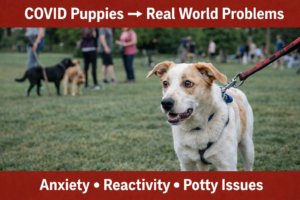 How COVID Puppies Are Struggling Now — And How to Fix Socialization, Anxiety, and Potty Training Issues
Dogs raised during COVID didn’t get the same start as most puppies—and we’re still seeing the effects today.
During lockdowns, routines changed. Socialization opportunities disappeared. Dogs got used to constant human presence. Now that life has returned to normal, many owners are noticing new problems showing up all at once.
If your dog seems more anxious, reactive, or inconsistent than expected… you’re not alone.
Kansas City Dog Owners — Here’s What We’re Seeing
If you’re working through these challenges and need help from a dog trainer in Kansas City, this pattern has become extremely common. Dogs that grew up during COVID are now struggling to adapt to normal routines, distractions, and time alone.
The good news? These are not permanent problems—they’re training and structure issues that can be improved quickly with the right approach.
👉 https://kissdogtraining.com/dog-trainer-kansas-city/
Winner – Best Dog Trainer in Johnson County (2023, 2025).
1. Socialization Gaps (COVID Puppies)
The biggest issue we’re seeing is simple:
Dogs didn’t experience the world during the most important developmental window.
That early window (roughly 3–15 weeks) is when dogs learn:
- People are safe
- Other dogs are safe
- The world is safe
COVID disrupted that completely.
Now we’re seeing dogs that:
- Avoid people or dogs
- Bark, growl, or lunge
- Shut down or try to escape
- Show stress signals like panting or yawning
What To Do Instead
Stop focusing on what your dog missed—and start building it now.
You don’t need chaos. You need controlled exposure.
- Sit outside your home or at a park
- Keep your dog at a comfortable distance
- Pair people/dogs with food (calm = reward)
- Use a consistent marker word (like “friends”)
This is where dog training Kansas City owners often get stuck—they try to rush interactions instead of building calm, neutral behavior first.
The 3 Rules That Matter
- High Frequency: daily exposure
- Short Duration: 10–15 minute sessions
- Under Threshold: don’t push too far
If your dog is reacting, you’re too close. Distance fixes most problems.
👉 https://kissdogtraining.com/why-your-dog-isnt-listening/
2. Separation Anxiety After COVID
This one is predictable—and completely avoidable.
Your dog didn’t become “anxious.”
They became dependent.
For months (or years), they learned:
“My people are always here.”
Then suddenly… they’re not.
Now we see:
- Barking or whining when left alone
- Destructive behavior
- Panic when routines change
What To Do Instead
You need to build independence on purpose.
Start creating the routine your dog will live, not the one you’re currently in.
- Scheduled alone time every day
- Crate training (done correctly)
- Stop taking the dog everywhere
- Teach them to settle without you
Simple Daily Structure That Works
- Crate during meals (with a Kong)
- Short, planned separation sessions
- Evening “TV crate time”
- Calm entry/exit routines
If you do this right, your dog learns:
“Being alone is normal—not something to panic about.”
👉 https://kissdogtraining.com/why-your-dog-wont-stop-barking-at-the-doorbell-and-how-to-fix-it/
3. Potty Training Regression
This one blindsides people.
During COVID, dogs got used to:
- Unlimited access outside
- Frequent breaks
- Constant supervision
Then normal life returns… and accidents start happening.
Not because your dog “forgot.”
Because they were never fully trained to hold it under real-life conditions.
What To Do Instead
You need to train for the schedule you’re going back to.
- Build up crate time gradually (goal: ~3 hours)
- Practice structured potty breaks
- Remove “free access” habits
- Reinforce successful holds
Smart Transition Strategies
- Come home at lunch the first week
- Use doggy daycare (selectively)
- Hire a dog walker short-term
This is where in-home dog training Kansas City can make a huge difference—because we’re working inside your real routine, not a controlled facility.
The Big Picture Most People Miss
These issues are not random.
They all come from the same place:
Your dog adapted perfectly to the life they were given.
Now the environment changed—and they need help adjusting.
Dog training isn’t complicated — you just need a little more information.
Focus on:
- Structure
- Routine
- Clear expectations
- Rewarding the behavior you want
Not the “why.”
Don’t fall into the why hole.
Your dog doesn’t need analysis—they need clarity.
When To Get Help
If you’re seeing:
- Escalating anxiety
- Aggression or reactivity
- Ongoing accidents
- Struggling to make progress
Don’t wait.
These behaviors get harder to fix the longer they’re repeated.
👉 https://kissdogtraining.com/dog-trainer-kansas-city/
Final Thought
A lot of really good dogs got a really unusual start.
That doesn’t mean they’re broken.
It just means they need structure, exposure, and consistency moving forward.
Do what you can. Stay consistent. And if you need help, reach out before small issues become big ones.
SEO Title
How COVID Puppies Are Struggling Now — And How to Fix Behavior Issues
Meta Description
Many COVID puppies missed early socialization and now struggle with anxiety, reactivity, and potty training. Learn how to fix these issues with simple routines and structure.
Alt Text
COVID puppy struggling with socialization and separation anxiety after returning to normal routines