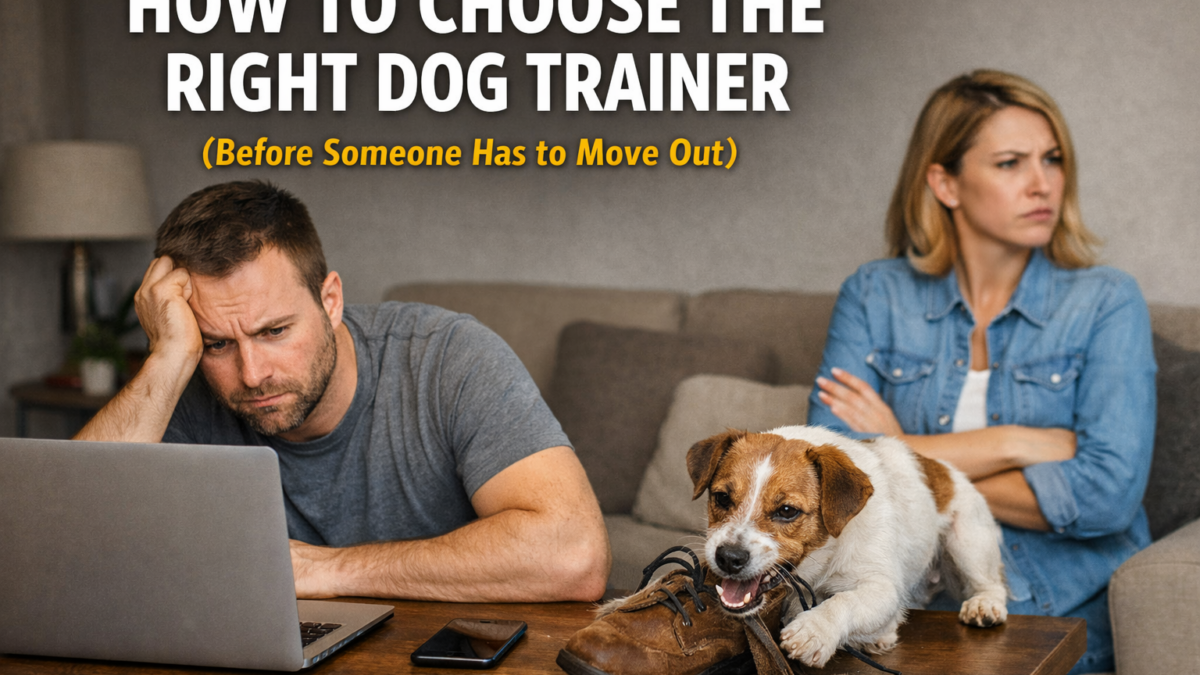
How to Choose the Right Dog Trainer
 How to Choose the Right Dog Trainer
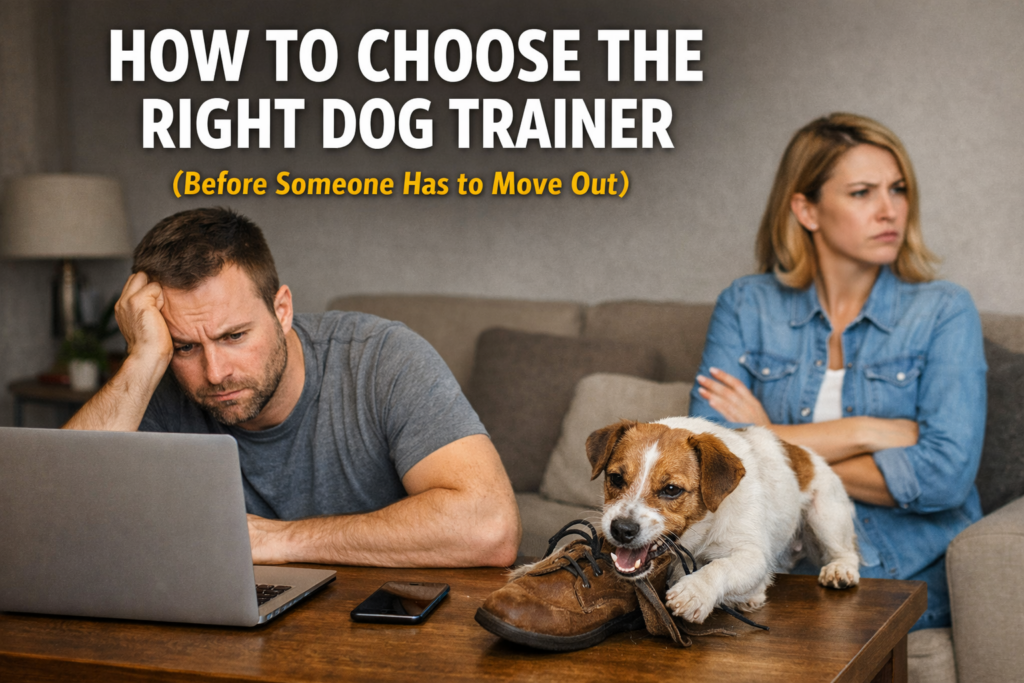
So there you sit, staring at a computer screen full of dog trainers.
Your spouse has made it painfully clear: if you don’t get your dog’s fill-in-the-blank behavior under control, either you or the dog is going to need a new place to live.
Pulling on the leash. Jumping on guests. Barking at everything that moves. Biting, nipping, potty accidents, or complete meltdowns on walks.
Whatever the issue is, it didn’t come out of nowhere — but now it’s wrecking the peace in your home and you’re under pressure to fix it.
The problem?
No one ever tells dog owners how to choose the right dog trainer, or what kind of training actually makes sense for their situation.
Let’s fix that.
Picking the Right Dog Trainer Without Losing Your Mind
Here’s an uncomfortable truth about dog training:
Anyone can call themselves a dog trainer.
There’s no license. No governing body. No required education. That means the list of trainers you’re scrolling through is a mix of experienced professionals, well-meaning hobbyists, and people who probably shouldn’t be teaching anyone — human or dog.
In my experience, choosing the right dog trainer comes down to two things:
Education and training philosophy.
Education and Certification Actually Matter
Certification doesn’t mean someone knows everything. It does mean they cared enough to:
- Learn basic learning theory
- Pass a standardized test
- Commit to continuing education
A professional dog trainer should be able to clearly explain:
- What education they have
- What certifications they hold
- How they continue learning
If a trainer dodges those questions, that tells you something — and it’s usually not good.
Dog Training Philosophy: How Trainers Actually Change Behavior
You don’t just need to know what a dog trainer teaches — you need to know how they plan to change behavior.
Here’s my very simple litmus test:
Any technique you use on a dog should also be acceptable to use on a child.
If you’re hearing about intimidation, fear, pain, “being the alpha,” or forcing compliance, ask yourself whether that makes sense in your home.
Good dog training should:
- Teach dogs what to do, not just what not to do
- Focus on clarity, structure, and consistency
- Build habits instead of relying on corrections
Interview at least three trainers. Ask real questions:
- How do you deal with leash pulling?
- What do you do about puppy biting?
- How do you handle barking or reactivity?
Don’t just listen to what they say — listen to how clearly they explain it.
Private Dog Training vs. Group Classes: Where Real Learning Happens
This is where a lot of dog owners get steered wrong.
Real learning usually happens in private, in-home dog training.
Why? Because that’s where your dog’s problems actually live.
Your dog doesn’t pull on leash in a classroom.
Your dog doesn’t lose their mind over guests in a training building.
Your dog practices problem behaviors in:
- Your living room
- Your front door
- Your neighborhood walks
- Your daily routines
That’s why working with an experienced dog trainer in Kansas City who can see the behavior where it actually happens can save a lot of frustration.
Dog Trainer in Kansas City: https://kissdogtraining.com/dog-trainer-kansas-city/
Private in-home training allows a professional trainer to:
- See the behavior in context
- Coach you in real time
- Adjust routines and expectations immediately
- Teach skills that actually transfer to daily life
Where Group Classes Do Fit
Group classes can be valuable — when they’re used correctly.
They work best for:
- Proofing skills a dog already understands
- Adding controlled distractions
- Practicing around other dogs and people after a foundation exists
Think of group classes as an extra layer, not the foundation.
Choosing the Right Training for Your Situation
Before committing to any program, consider:
- How severe the behavior is
- Where the behavior happens
- How much time you realistically have
- How your dog handles stress and distractions
A good trainer’s job is not to magically “fix” your dog — it’s to teach you how to change behavior between sessions.
Why Your Dog Isn’t Listening — And How to Fix It: https://kissdogtraining.com/blog/
Time, Cost, and Reality Checks
Dog training should be practical, structured, and measurable — not endless therapy.
A professional trainer should be honest about:
- How long change will realistically take
- What you need to practice
- What’s fixable versus what needs management
If someone promises instant results, that’s a red flag.
If You Need Hands-On Help
If you’re done guessing and want real-world guidance that actually fits your home, working with a professional can make a difference.
I specialize in private, in-home dog training because that’s where real learning happens.
Contact KISS Dog Training: https://kissdogtraining.com/contact/
The goal isn’t perfection — it’s a calmer dog, a clearer plan, and a home that works for everyone.
Frequently Asked Questions About Choosing a Dog Trainer
How do I choose the right dog trainer?
Look for someone who can clearly explain their education, training philosophy, and how they create behavior change.
Does certification matter when choosing a dog trainer?
Certification shows commitment to learning theory and professional standards, even though it doesn’t guarantee perfection.
Is private dog training better than group classes?
Private training is often the best starting point because most behavior problems happen at home.
When should I hire a professional dog trainer?
If behavior issues are creating stress, conflict, or safety concerns, hiring help sooner can prevent escalation.