Think Your Dog Is Stubborn? You’re Probably Missing This
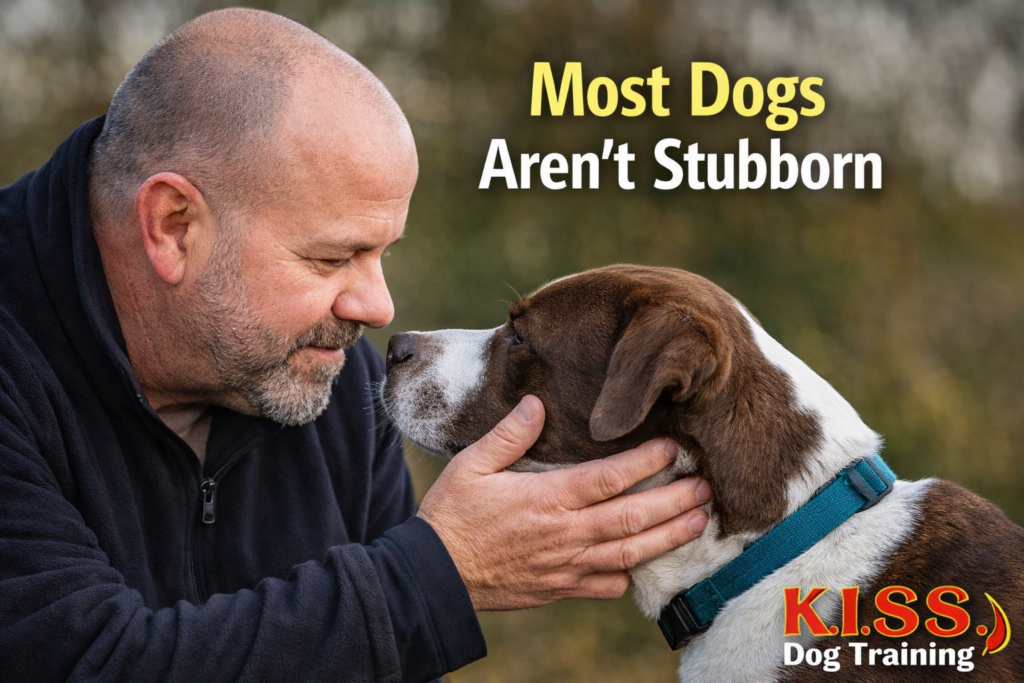
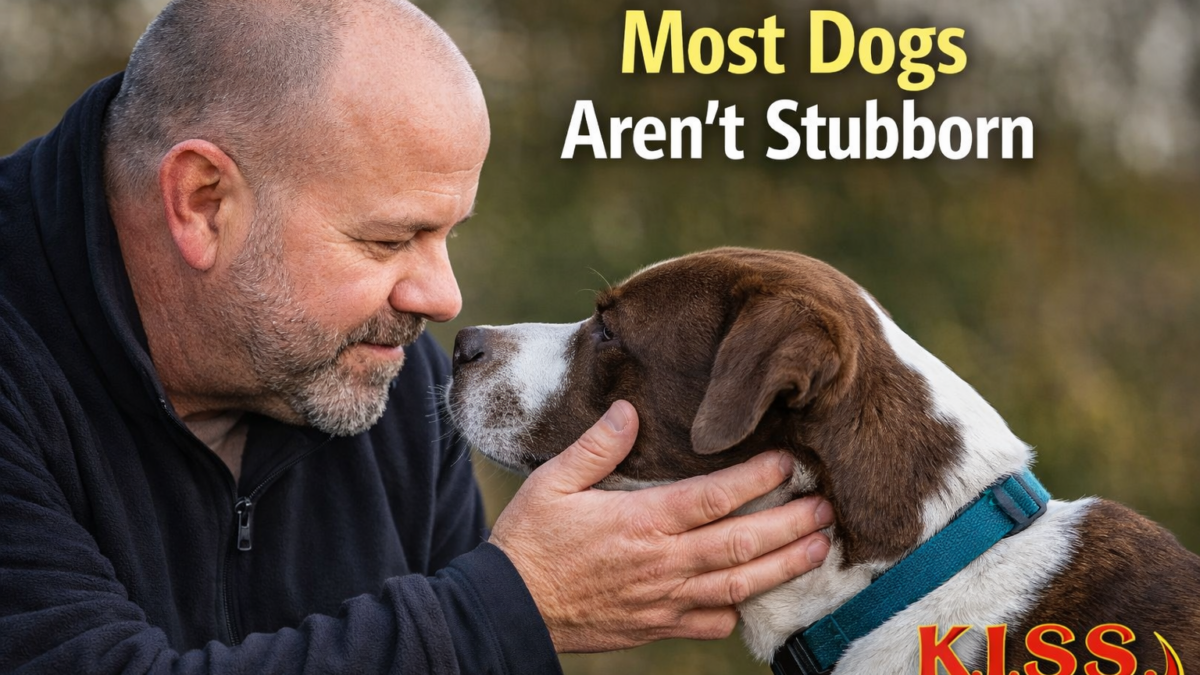
 Most Dogs Aren’t Stubborn — We Just Need a Little More Information
Think Your Dog Is Stubborn? You’re Probably Missing This
🐾 Training Owners, Not Dogs
That’s been my tagline for years.
And I often tell my clients — usually with a smile — that dogs are rarely the ones with the problem when it comes to dog training.
That doesn’t mean owners are bad.
It means we’re human.
We assume.
When a dog won’t sit…
Won’t walk…
Won’t come…
Won’t cooperate…
The word shows up quickly:
Stubborn.
But here’s the reality:
Most dogs aren’t stubborn.
Most of the time, we’re just missing information.
And when we assume we already understand what’s happening, we stop observing what’s actually happening.
Years ago in a beginner class, I had two dogs that reminded me of that lesson in a humbling way.
One was a three-pound Chihuahua who “refused” to sit.
The other was a fifty-five-pound Great Pyrenees puppy who stopped walking the moment leash pressure touched his collar.
Different breeds.
Different sizes.
Different behaviors.
Same temptation on my part.
To assume.
🐾 The “Stubborn” Chihuahua
The Chihuahua’s owner told me she wouldn’t sit in class.
That’s usually where frustration begins.
But I asked a simple question:
“Does she sit at home?”
Yes.
That told me something important. This wasn’t a knowledge problem. She knew how to sit.
So instead of asking, “How do I make her sit?” I asked, “What’s different here?”
The answer wasn’t motivation.
It wasn’t dominance.
It wasn’t attitude.
It was the floor.
She weighed three pounds. The training facility floor was concrete. Chihuahuas aren’t exactly built for insulation against cold, hard surfaces.
If you were that small and someone asked you to plant your belly on cold concrete, would you want to?
The next week I brought a blanket.
Within ten minutes, she was sitting calmly and confidently.
She wasn’t stubborn.
She was uncomfortable.
I almost missed it because I was in Trainer Mode instead of Observation Mode.
🐾 The Great Pyrenees Who Hit the Brakes
The Great Pyrenees puppy was described as shutting down on walks.
He would walk fine for several minutes… then stop cold and refuse to move.
I asked the owner to show me.
Within moments, the pattern became obvious:
He would slow down slightly.
The owner wouldn’t notice.
The leash would tighten.
Pressure would hit his neck.
And that’s when he stopped.
Before changing equipment or technique, I suggested something important:
Have your veterinarian check his neck.
If a dog reacts strongly to pressure in one area, we do not assume it’s purely behavioral. We rule out pain first.
The vet cleared him.
That meant we could safely move forward.
Then we made one simple adjustment: we switched to a standard harness that moved pressure from the neck to the shoulders.
Same dog.
Same owner.
Same walk.
Different pressure point.
The stopping disappeared.
He wasn’t stubborn.
He didn’t like pressure on his neck.
That’s not personality.
That’s information.
🐾 The Why Hole vs. The What
This is where many owners fall into what I call the Why Hole.
“Why is he doing this?”
“Why is she acting this way?”
“Why won’t he just listen?”
When we chase why, we tend to invent stories.
He’s dominant.
She’s testing me.
He’s manipulating.
She’s being dramatic.
But we don’t speak dog. And dogs don’t speak English.
When we focus on why, we create narratives.
When we focus on what, we gather data.
-
What changed?
-
What is the dog reacting to?
-
What happens when I adjust the environment?
-
What happens when I remove discomfort?
-
Have I ruled out pain?
The Chihuahua didn’t need firmer commands.
The Pyrenees didn’t need stronger corrections.
Both needed someone willing to slow down and observe before acting.
🐾 Before You Call Your Dog Stubborn
If your dog seems resistant, pause before labeling.
Ask yourself:
• Is there discomfort involved?
• Is there environmental stress?
• Has something changed?
• Have I ruled out medical causes?
• Am I reacting… or observing?
When I tell clients that dogs are rarely the ones with the problem, I’m not criticizing owners.
I’m reminding them of something empowering.
We’re the ones with the big brains.
We can observe patterns.
Adjust environments.
Change equipment.
Rule out pain.
Shift timing.
Slow down.
Think.
The Chihuahua didn’t need discipline.
She needed a warmer surface.
The Great Pyrenees didn’t need firmer handling.
He needed pressure moved off his neck — and a veterinarian’s input to make sure nothing medical was hiding underneath.
Neither dog was stubborn.
They were communicating.
When we assume, we stop listening.
When we observe, we start learning.
And that’s why I say dog training isn’t complicated — you just need a little more information.
Most dogs aren’t stubborn.
We just need to slow down long enough to gather the information they’re already giving us.
🐾 Ready for Help?
If you’re feeling stuck and want calm, practical guidance without guessing, forcing, or spiraling into the Why Hole, you can work with an experienced dog trainer in Kansas City:
👉 https://kissdogtraining.com/dog-trainer-kansas-city/
To get started, visit the Contact KISS Dog Training page:
👉 https://kissdogtraining.com/contact/
Want to see what other clients have experienced?
Read the KISS Dog Training reviews here:
👉 https://www.google.com/search?q=KISS+Dog+Training+Shawnee+KS