When Should I Stop Using Treats?
 When Should I Stop Using Treats?
🐾 If you’ve ever wondered when you’re supposed to stop using treats, you’re not alone. Many dog owners worry that food rewards will create dependence, spoil their dog, or stop working over time.
Here’s the truth: you don’t stop paying your dog — the paycheck changes.
This blog follows directly after the previous blogs on hand feeding, redirection, and the Leave It cue.
Once your dog can notice a trigger, disengage, and choose you, the next natural question is how long rewards are needed — and what those rewards should look like as skills improve.
🐾 Why People Worry About Treats
When I get pushback about treats from clients, I usually ask one simple question:
“When will it be okay for your boss to stop giving you a paycheck?”
That question usually stops the conversation — because the answer is obvious.
We all work for rewards. We always have.
Rewards come in many forms: paychecks, praise, promotions, bonuses, recognition, or simply being told “you did a good job.” Dogs are no different.
Expecting a dog to work without reinforcement is no different than expecting a person to show up to work indefinitely with no pay, no feedback, and no acknowledgment.
And just like people, dogs don’t need the same reward forever — but they do need affirmation, guidance, and reinforcement to understand they’re on the right track.
To assume that you — or your dog — don’t want or need encouragement, praise, or a simple “good job” just doesn’t line up with how learning works.
🐾 Training Is Paid Work (Whether We Admit It or Not)
When you look at it this way, the concern about treats starts to fall apart.
Every living being works for outcomes. Dogs are no different.
We go to work for paychecks. Kids go to school for grades, praise, or opportunities. Dogs work for things they value.
Early in training, food is the clearest, easiest paycheck you can offer. It’s fast, consistent, and meaningful.
The mistake isn’t using treats — the mistake is never teaching the dog why the behavior matters or how rewards evolve.
🐾 Bribes vs. Rewards: The Difference Matters
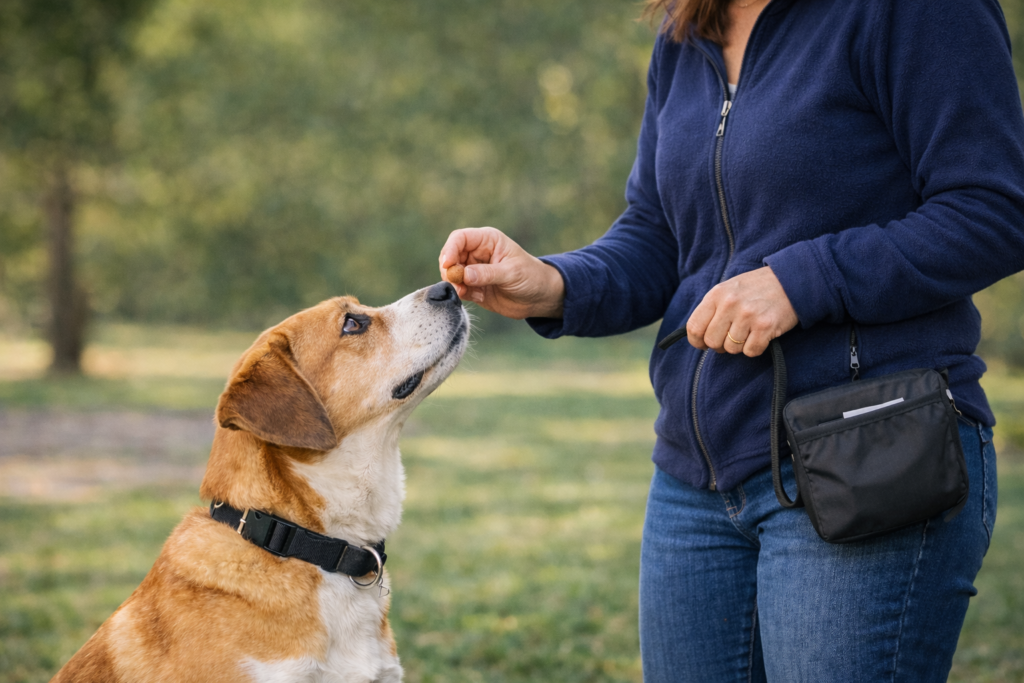
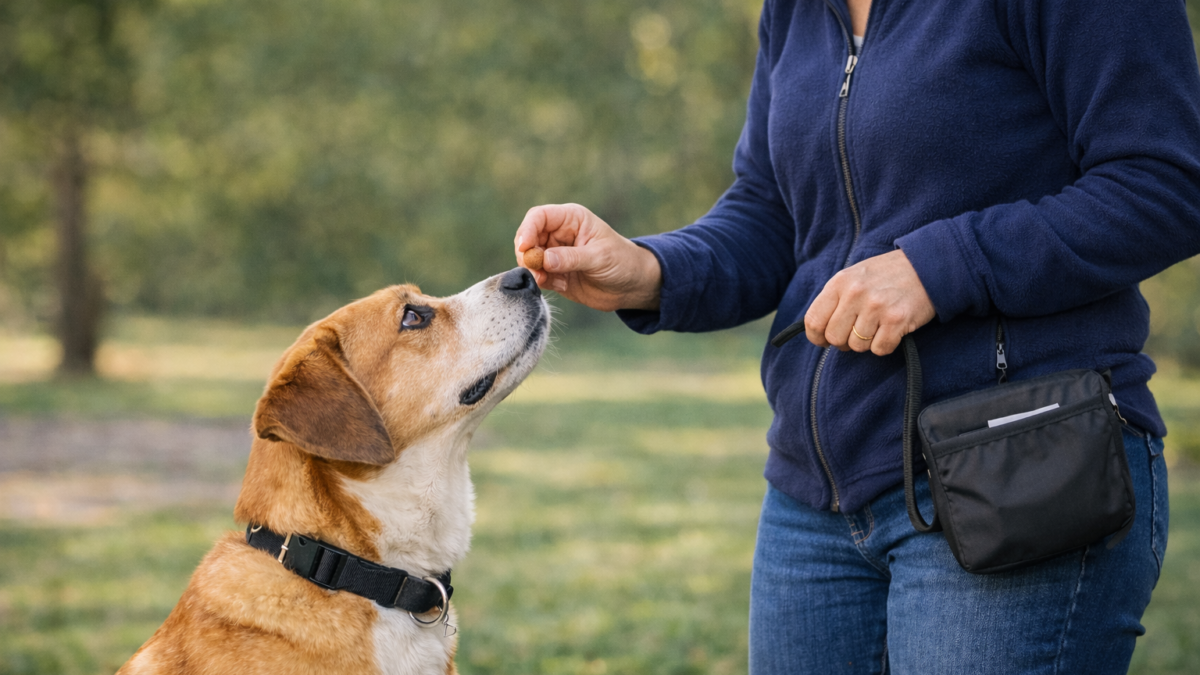
A bribe is a treat shown before a behavior happens to try to convince the dog to do something. The dog isn’t choosing — they’re being lured.
Lures themselves aren’t wrong. They are a basic part of learning theory and are often helpful early on when a dog is first learning what a behavior looks like.
The problem comes when lures are used for too long.
If the dog must see the treat before doing the work, the lure slowly turns into a bribe. The dog begins to expect the paycheck upfront instead of after the job is done.
A reward works differently. The behavior happens first, then the payment follows. The dog learns, “I did the work, and that worked out for me.”
That timing is what turns food from a bribe into a teaching tool — and that’s learning, not bribery.
The key part of training is moving from a lure to a reward as quickly as possible. A lure is only there to help teach what the behavior looks like. Once the dog understands the task, the lure must be faded out.
At that point, the reward takes its place. The dog works first, then gets paid. That clean transition is what keeps motivation strong without creating expectation or dependence.
🐾 Why Food Works So Well Early On
Food works especially well early in training because it is immediate, easy to deliver, consistent, and valuable to most dogs.
In the early stages of training, food removes confusion. It tells the dog exactly which behavior earned reinforcement.
That clarity is especially important when teaching new skills, working around distractions, or changing emotional responses.
🐾 How Rewards Change Over Time
As skills become reliable, the reward doesn’t disappear — it transforms.
Early on, food does most of the heavy lifting. As understanding and confidence grow, praise is added. Over time, praise, attention, and touch become maintenance rewards that carry more of the weight.
A dog that responds to a kind word or an ear rub didn’t stop needing food — they learned the behavior so well that food no longer has to do all the teaching.
Over time, attention, love, and a kind touch become powerful maintenance rewards, because they strengthen the relationship as well as the behavior. The reward
changed because the understanding — and the connection — improved.
🐾 Why Removing Rewards Too Soon Backfires
When rewards disappear abruptly, three things tend to happen:
- Motivation drops
- Behaviors weaken
- Frustration increases
This is why dogs often seem to “forget” commands they supposedly know.
It’s not stubbornness — it’s unclear expectations.
🐾 Real Life Isn’t a Training Room
Distractions matter.
A dog may work happily for praise in the living room but need higher-value rewards outside, around dogs, people, or exciting environments.
That doesn’t mean training failed. It means context matters.
Good trainers adjust rewards based on difficulty — just like pay increases with responsibility.
🐾 So… When Do You Stop Using Treats?
You don’t.
Instead, you:
- Adjust value
- Adjust frequency
- Match rewards to difficulty
The goal isn’t treat-free obedience — it’s reliable behavior and emotional clarity.
🐾 Questions, Comments, or Topic Requests
Training isn’t one-size-fits-all, and good questions usually come from real life.
If this topic raised questions about your dog, your training plan, or how rewards should be used in your specific situation — or if you’re looking for a Dog Trainer in Shawnee — we encourage you to reach out through our Contact Us page.
We also welcome suggestions for future blog topics. Many of the best articles start as client questions, and your feedback helps guide what we cover next.