How to Run a Petting Party at Home (Without Making Things Worse)
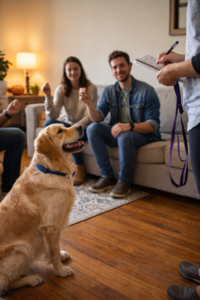 How to Run a Petting Party at Home (Without Making Things Worse)
The Petting Party Series — Part 2
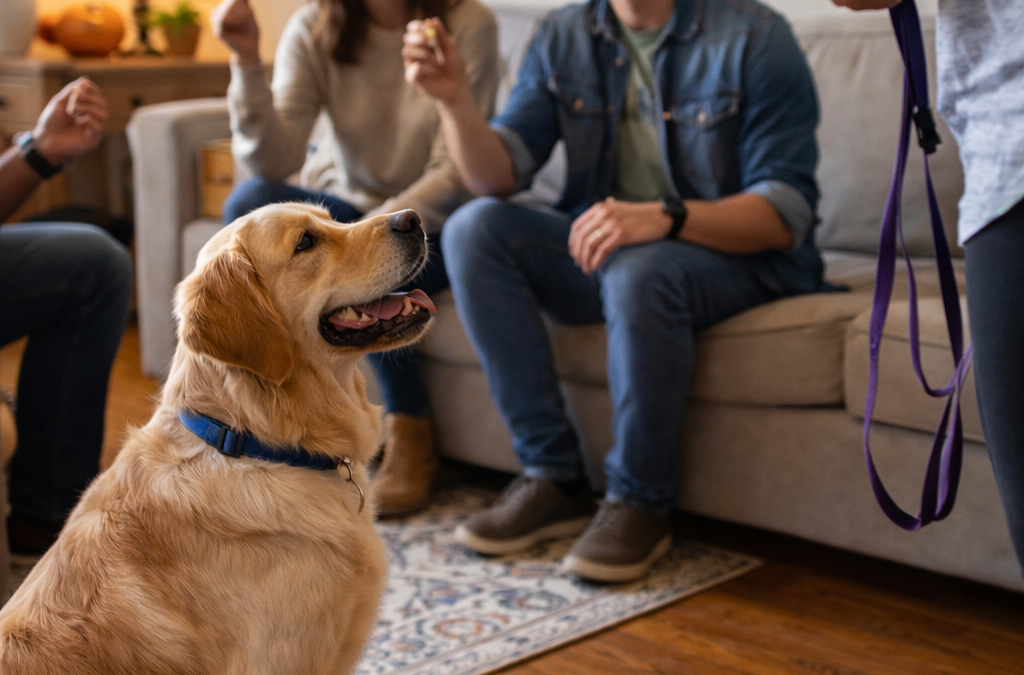
In Part 1 of the Petting Party series, we talked about *why* dogs lose their minds when guests arrive. Now it’s time to talk about the mechanics—how to set this up in the real world without creating chaos.
This isn’t about throwing a party and hoping your dog magically improves. It’s about engineering repetition, predictability, and positive outcomes in a way your dog can actually understand.
The Goal of the Petting Party
The goal isn’t to overwhelm your dog or turn your house into a circus.
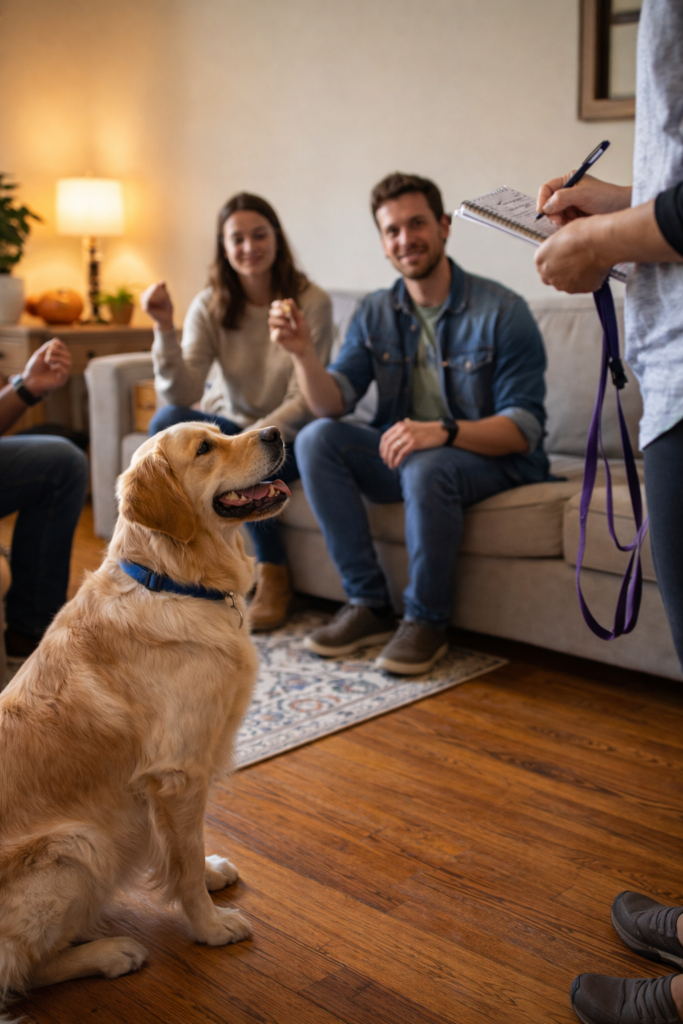
The goal is controlled repetition. Every entry, every knock, every doorbell becomes another chance for your dog to practice a calm, predictable response instead of improvising their own.
Why Repetition Matters More Than Duration
A three-hour gathering doesn’t help because it’s long. It helps because people leave and re-enter.
Each re-entry is another learning opportunity. Dogs don’t learn from one big moment—they learn from many small, similar ones stacked together.
The Cooler Trick (Yes, It’s Intentional)
Instead of keeping drinks inside, place a large cooler outside near the front door.
Every time a guest wants a drink, they must exit and re-enter through the front door.
That means more doorbell rings, more knocks, and more chances to practice calm greetings.
Why Guests Must Follow Rules
This system only works if everyone plays by the same rules.
Guests who ignore instructions, rush the dog, or assume they “know dogs” can derail the entire process.
That’s why guest selection matters just as much as the training itself.
Making the Process Foolproof
Post clear instructions at the entry point.
Simple, visible rules remove guesswork and ensure consistency, even after the third or fourth drink.
Predictability builds confidence—for both dogs and people.
What This Actually Teaches Your Dog
Over time, the doorbell stops predicting chaos.
Instead, it predicts structure, rewards, and clarity.
Your dog isn’t being suppressed—they’re learning what works.
Important Reality Check
Dogs will still bark sometimes. That’s normal.
The goal isn’t silence—it’s faster recovery, lower intensity, and better emotional regulation.
What Comes Next
Part 3 of this series explains why puppies and adult dogs must be handled differently during this process—and why moving too fast with an adult dog can create serious problems. (If you are catching this series out of order, here is the link to Part 1)
Kansas City Dog Owners — When to Get Help
If your dog struggles with guests, reactivity, or stress in the home, working with an experienced dog trainer in Kansas City can help you apply this process safely and effectively.
https://kissdogtraining.com/dog-trainer-kansas-city/
Need Hands-On Guidance?
If you want help implementing this process correctly for your dog and your home, start here:
https://kissdogtraining.com/contact/