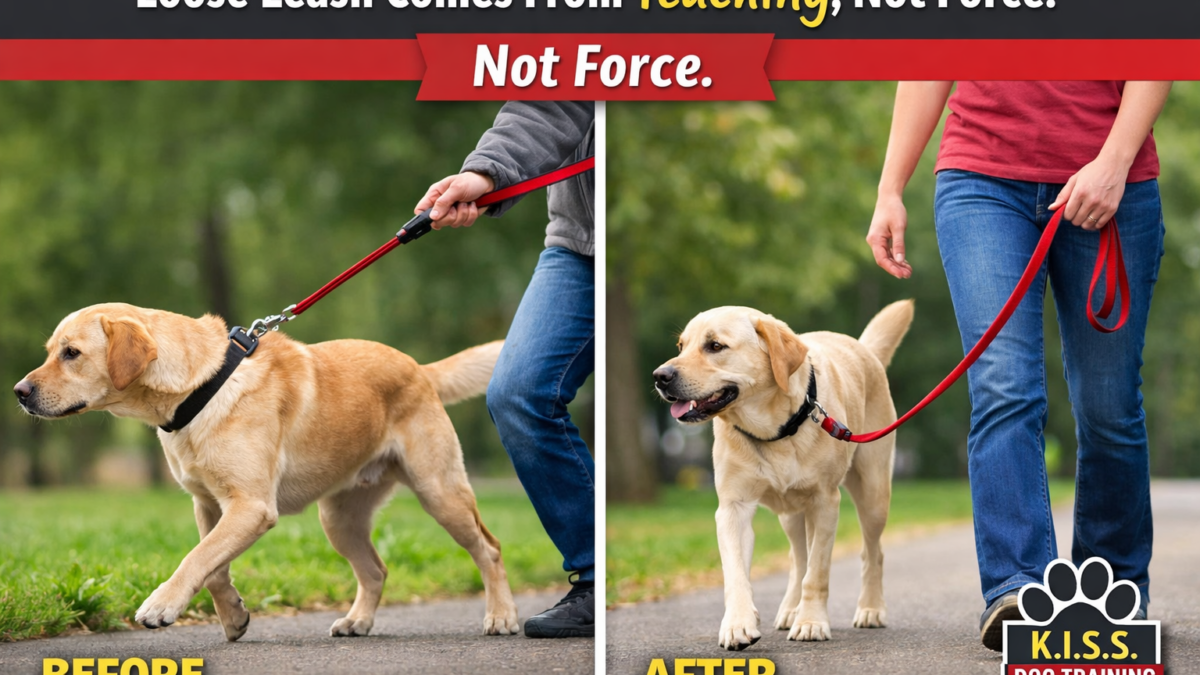
Why Do Dogs Pull on the Leash???
Why Do Dogs Pull on the Leash?
Clear, calm, and honest leash-walking guidance—without force or frustration.
So why do dogs pull on the leash?
The simple answer is this: they’ve never been taught not to.
That may sound obvious—and maybe a little frustrating—but it really is the truth. Dogs aren’t born wearing collars or leashes. Puppies don’t come hard-wired with an understanding of what these strange contraptions are for, how they’re supposed to feel, or why a human suddenly has opinions about where they’re allowed to go. If we don’t teach leash skills intentionally, dogs will do what dogs always do: figure out what works.
And pulling works.
——————————————————————————————
🐾 Pulling Has Nothing to Do With Dominance
This is not a power struggle.
Let’s clear something up right away. A dog pulling on the leash is not being dominant, stubborn, disrespectful, or malicious. Dogs are not plotting power grabs or trying to “take control” of your household because they pulled toward a squirrel. That idea gives dogs far more cognitive and political ambition than they actually possess.
Dogs are simple, practical creatures. If they see something interesting, they go investigate. If pulling gets them there faster—and it usually does—then pulling becomes the behavior of choice.
That’s not defiance. That’s reinforcement.
——————————————————————————————
🐾 Dogs Do What Works
Behavior follows reinforcement—every time.
Dogs are instant-gratification animals. If dragging you across the yard gets them closer to a smell, another dog, or a moving object, then pulling has just paid off.
From the dog’s perspective:
- Pull → move forward → get closer to the interesting thing
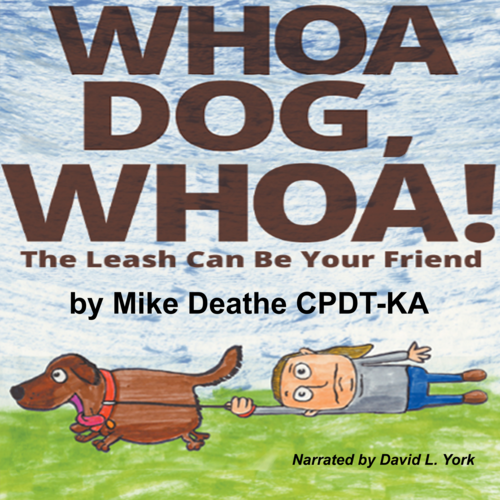
Meanwhile, the human is hanging on, yelling, tightening the leash, and generally making a lot of noise. Ironically, to the dog, that can look like participation—not protest.
Have you ever considered that, from your dog’s point of view, it might look like you’re having just as much fun as they are on the way to that squirrel?
——————————————————————————————
🐾 Why Leash Pressure Makes Things Worse
Unintentional tension creates resistance.
One of the biggest mistakes people make with leash training is constant, unconscious leash pressure. Every tug, pull, and correction creates tension. And tension invites resistance.
Remember Newton’s second law of motion? Every action has an equal and opposite reaction. When pressure is applied to a dog’s neck—even lightly—the natural response is to push back against it.
In many cases, we create the pulling we’re trying to stop.
——————————————————————————————
🐾 Start by Taking Your Hands Out of the Equation
Consistency beats correction.
One of the simplest ways to teach leash awareness is to remove your hands entirely. Start inside the house. Use a standard 6-foot leash and attach it around your waist, then clip it to your dog. Think of it as an umbilical cord connecting you and your dog.
This does a few important things immediately:
- Eliminates unconscious leash jerking
- Creates consistent feedback instead of sudden corrections
- Teaches the dog that being near you matters
Now, without using your hands, take one large step in any direction and ask your dog for a sit.
If your dog doesn’t know sit, stop here. Leash training does not work without basic obedience. Go teach sit first.
When your dog sits:
- Mark the behavior
- Praise enthusiastically
- Give a food reward
One step → sit → reward.
——————————————————————————————
🐾 Build Movement Slowly
Progress happens in layers, not leaps.
As your dog improves, increase the difficulty gradually:
- One step becomes two
- Two becomes three
- Giant steps become normal walking steps
Before you know it, you’re moving around the house with a loose leash and a dog that’s paying attention—without pulling.
Once this works indoors, take it outside. Be realistic, though. Your living room and your front yard are two very different environments. Distractions increase dramatically, so expect to go back to shorter distances and rebuild success slowly.
That’s not failure—that’s training.
——————————————————————————————
🐾 What This Method Teaches
These are the foundations of polite leash walking.
- Loose leash walking matters — dogs should follow movement, not fight pressure.
- Attention is rewarding — watching the handler and staying engaged pays off.
- Stopping means stopping together — when the human stops, the dog stops and waits for the next cue.
These skills form the foundation of polite walking behavior.
——————————————————————————————
🐾 What If Your Dog Already Pulls?
You’re not starting from zero—you’re starting from history.
If your dog has a long history of pulling, don’t panic. Bad habits can be changed—but not instantly. You’re replacing a behavior that has paid off for a long time. That takes patience, repetition, and consistency.
There is no quick fix. There is, however, a clear path forward.
So lace up your walking shoes, grab your dog, and be honest with yourself about the time and effort required. The work is worth it—and your walks will be better for both of you.
In the next post, we’ll talk about what to do when leash walking is already broken—and how to fix it without frustration or force.
——————————————————————————————
🐾 Want Hands-On Help?
Sometimes timing, environment, and real-world distractions matter.
If you’re looking for hands-on help, working with an experienced Dog Trainer in Kansas City or Dog Trainer in Shawnee can make leash skills much easier to teach correctly from the start. In-home coaching allows us to work with real-world distractions and build routines that actually stick.
Learn more about In-Home Dog Training in Kansas City or In-Home Dog Training in Shawnee if you want personalized guidance tailored to your dog and your environment.