Why Dogs “Forget” How to Speak Dog — And How Structured Daycare Helps | Kansas City Dog Training
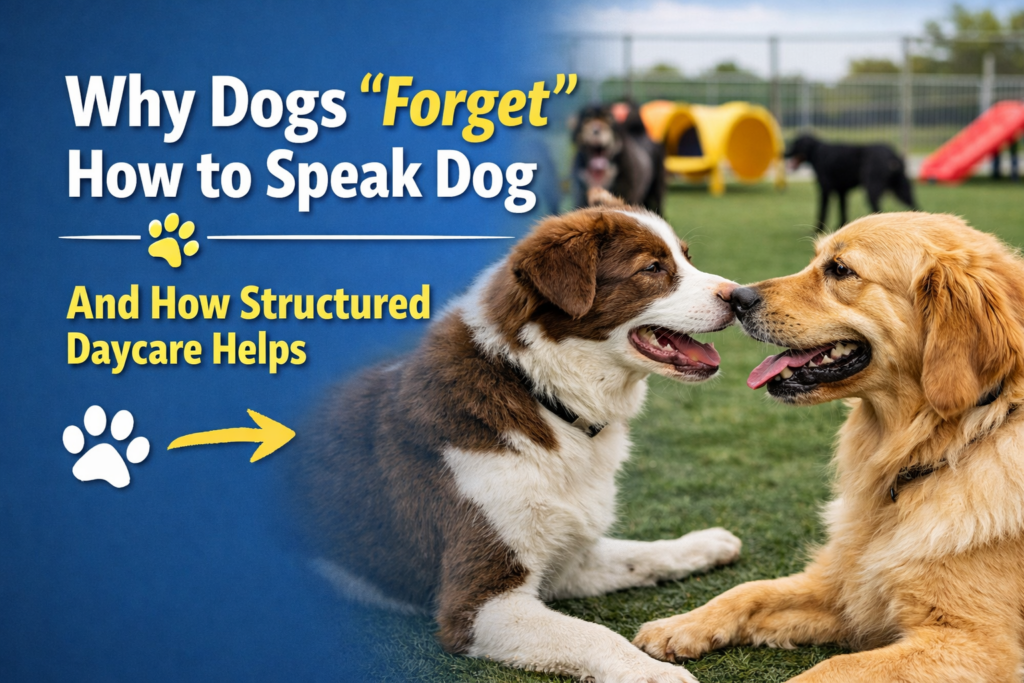
 🐾 Why Some Dogs “Forget” How to Speak Dog — And Why Daycare Can Help
Why Dogs “Forget” How to Speak Dog — And How Structured Daycare Helps | Kansas City Dog Training
Have you ever taken a foreign language in high school or college?
Fast forward 15 or 20 years… how much of it do you actually remember?
I took Spanish for years. At one point I could hold conversations. I even dreamed in Spanish. Now? I can barely remember how to conjugate a verb — and mostly remember a few of the dirty words 🙂.
Why?
Because I stopped using it.
Language — like any skill — fades without practice. When we don’t exercise it, it weakens. And the same thing happens socially.
We’ve all seen it. Someone who was outgoing and conversational for most of their life retires, experiences a health shift, or loses a spouse. They stop going out as much. They interact less. Over time, the script flips. They become less conversational. More withdrawn. Less comfortable socially.
Not because they can’t socialize.
Because they stopped practicing.
And dogs are no different.
What we practice, we keep.
What we neglect, we lose.
🐶 When Dogs Stop Practicing “Dog”
Imagine life from a dog’s perspective.
From puppyhood, everything revolves around humans. The family teaches sit, potty routines, structure, and how to coexist with the “family cat.” Life is predictable and safe. The dog becomes fluent in human expectations.
Then around 7 or 8 months old, something changes.
Now the dog is taken to crowded dog parks. Surrounded by unfamiliar dogs. When he growls to create space, his owners get upset. When he tries to disengage, he’s corrected. Maybe he even gets nipped.
To the dog, the conclusion is simple:
Dogs are unpredictable.
Dogs are stressful.
Dogs are unsafe.
This isn’t dramatic storytelling — it’s something I see regularly.
Many dogs are raised beautifully inside human households. They learn obedience. They learn structure. They learn how to live around people.
But they never truly learn how to communicate with other dogs.
Or they did — and then they stopped practicing.
🐾 What Dogs Actually Learn From Other Dogs
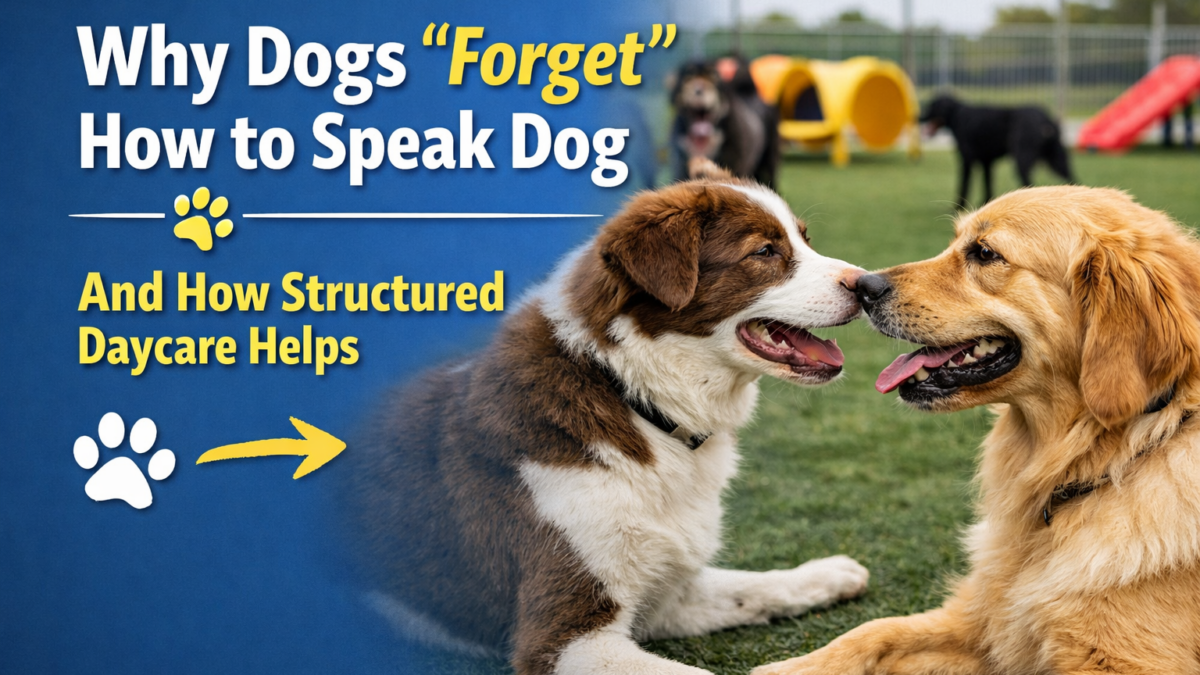
Dogs don’t automatically understand each other. They learn through exposure and repetition.
They learn things like:
-
What a play bow means
-
What lip licking or yawning signals
-
What a hard stare communicates
-
Why looking away can de-escalate tension
-
Why butt sniffing isn’t offensive
-
When to escalate and when to disengage
These are not human-taught behaviors. They’re dog language.
Without consistent, controlled exposure to other dogs outside their household, that fluency fades. Just like a language you once spoke. Just like a social muscle you stop using.
Practice matters.
🏃♂️ Why I Support Structured Doggy Daycare (When It’s Done Right)
This is why I support well-run, structured doggy daycare programs — when they are done correctly.
Not chaotic free-for-alls.
Not giant pens with 30 dogs and one distracted employee.
A quality daycare offers:
-
Safe energy release
-
Small, compatible play groups
-
Supervised interaction
-
Opportunities to practice reading and responding to other dogs
That kind of structured exposure helps maintain social fluency. It prevents fear from turning into reactivity and confusion from turning into conflict.
The goal isn’t just a tired dog.
It’s a socially competent one.
🏢 How to Choose a Good Doggy Daycare
Not all daycares are equal. If you’re evaluating one, here are some things to look for:
Immediate Transparency
You should be able to tour the facility without jumping through hoops. Transparency matters.
Small, Structured Groups
Playgroups should be limited in size (ideally 8–10 dogs) and grouped by age, size, energy level, and personality. Large, uncontrolled groups are a red flag.
Active Supervision
There should be at least one — preferably two — employees actively monitoring each group. Not on their phones. Not distracted.
Room to Move
Dogs need space to run and decompress. The goal is a satisfied, appropriately tired dog — not an overstimulated one.
Clear Policies
Ask about extra charges, late pickup policies, injury protocols, and rest breaks. If you don’t ask, you may be surprised.
📍 Kansas City Dog Owners — Why This Matters
Here in the Kansas City area, I consistently see two patterns:
-
Dogs who were never properly exposed and struggle socially.
-
Dogs thrown into chaotic environments and labeled “reactive” afterward.
Both are preventable.
If your dog struggles around other dogs, has had a negative dog park experience, or seems socially unsure, this is something I regularly help families navigate as a dog trainer in Kansas City.
You can learn more here:
https://kissdogtraining.com/dog-trainer-kansas-city/
Winner – Best Dog Trainer in Johnson County (2023, 2025):
https://kissdogtraining.com/best-of-johnson-county/
Responsible families seeking dog training in Kansas City aren’t just looking for sit and stay. They’re looking for structure, clarity, and guidance on when social exposure helps — and when it hurts.
And for some dogs receiving Kansas City dog training support, daycare isn’t the right solution at all.
🐾 Final Thought
Not all dogs belong in daycare.
Some thrive.
Some tolerate it.
Some truly dislike it.
That’s why it’s smart to talk to your trainer or veterinarian before jumping in.
Because what we practice, we keep.
What we neglect, we lose.
As always — Keep It Simple.