 How to Get Your Dog’s Attention: Teach “Watch Me”
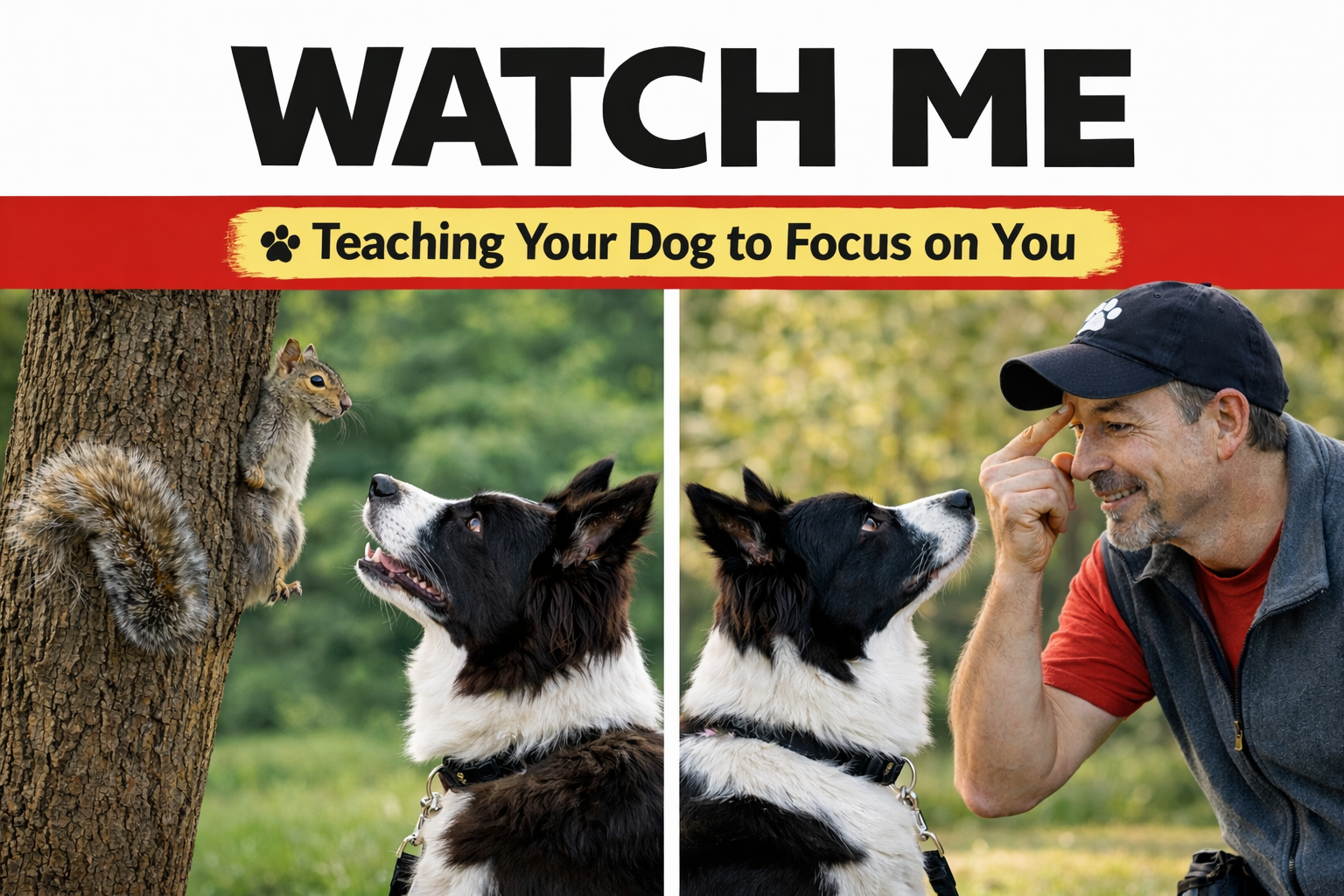
One of the first things I teach a dog is Watch Me.
Because if you don’t have your dog’s attention, teaching anything else is almost impossible.
If your dog is locked onto something else in the environment, you’re not really training.
You’re competing.
If this sounds familiar, you may also want to read:
Why Your Dog Isn’t Listening — And How to Fix It
https://kissdogtraining.com/why-your-dog-isnt-listening/
🐾 A Dog Trainer in Kansas City Perspective
As a dog trainer in Kansas City, one of the most common problems I see isn’t stubborn dogs.
It’s dogs that simply never learned how to redirect their attention back to their owner.
When a dog locks onto another dog, a squirrel, a delivery truck, or the neighbor walking down the sidewalk, most owners immediately start repeating commands.
But if the dog’s attention is already somewhere else, the command usually never lands.
That’s why one of the first foundation skills I teach in dog training Kansas City sessions is a simple cue called Watch Me.
It teaches your dog something incredibly important:
When the environment gets interesting, check back in with your handler.
If you’re working through attention problems, leash pulling, or reactivity, you can learn more about my approach here:
Dog Trainer in Kansas City
https://kissdogtraining.com/dog-trainer-kansas-city/
Winner – Best Dog Trainer in Johnson County (2023, 2025)
https://bojc2025.johnsoncountypost.com/pets/dog-trainer
🐾 The Goal of “Watch Me”
The goal of the cue is simple.
When I say “Watch Me” — or give a hand signal — I want the dog to:
• stop what they’re doing
• look at my face
• wait for the next instruction
That’s it.
But this simple skill becomes the foundation for solving a lot of behavior problems.
Dogs rarely walk and chew bubble gum at the same time.
If your dog is focused on you, they usually can’t continue the behavior you don’t like.
🐾 Interrupting Behavior vs Changing Behavior
Interrupting a behavior might win the moment.
But it doesn’t solve the problem long-term.
What we really want is a pattern the dog can learn.
The pattern looks like this:
• redirect away from the distraction
• pay attention to the handler
• perform a known behavior
Now we have a repeatable recipe.
Instead of arguing with the dog about what not to do…
We guide them toward what to do instead.
🐾 Redirecting Attention Away From the Problem
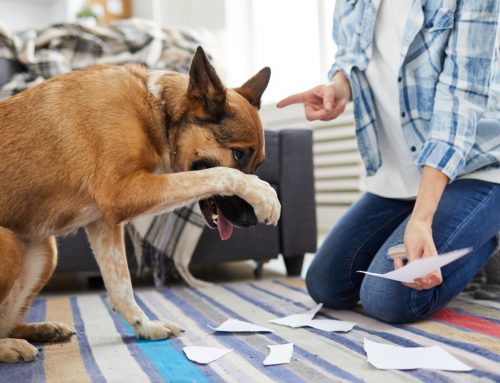
Let’s say your dog is chewing on your favorite pair of shoes.
Instead of focusing on punishment, the first goal is simple:
interrupt the moment and redirect attention.
That’s where Watch Me comes in.
When I first start teaching this skill, I’m usually very close to the dog.
At this stage, Watch Me simply means:
“Pay attention to me.”
Not recall.
Not advanced obedience.
Not complicated drills.
Just attention.
Simple Ways to Redirect Attention
That redirection might look like:
• making a quick kissy noise
• calling the dog’s name
• making a clicking sound with your tongue
• saying Watch Me
Sometimes I’ll also use light leash guidance.
For example, I might gently move backward so the dog turns toward me and notices the reward waiting behind them.
Yeah… me with the treat in my hand.
The goal isn’t punishment.
The message to the dog is simply:
“Hey… the good stuff is over here.”
🐾 How Watch Me Eventually Evolves Into Leave It
As training progresses, something interesting happens.
In the beginning, Watch Me is the tool we use to teach attention.
I’m close to the dog and simply asking them to stop what they’re doing and focus on me.
Later, as the dog gets better and we start adding distance and distractions, we introduce cues like Leave It.
Instead of just asking for attention, Leave It means disengage from that thing and come back to me.
In a sense, Watch Me and Leave It begin to overlap.
Both cues guide the dog toward the same outcome:
stop fixating on the distraction and reconnect with the handler.
We simply teach them in stages.
• first we teach attention
• then we teach disengagement
• then we practice it in the real world
Eventually a well-trained Leave It really means:
“Leave that alone and give me your attention.”
🐾 The Next Step in Training
Once your dog understands Watch Me, the next step is learning how to disengage from distractions in the real world.
That’s where the rest of this training progression comes in.
The progression continues here:
Leave It vs Wait
https://kissdogtraining.com/leave-it-vs-wait-this-one-could-save-your-dogs-life/
Leave It on the Leash
https://kissdogtraining.com/leave-it-on-leash/
Leave It in the Car
https://kissdogtraining.com/leave-next-step-car/
Leave It at the Park
https://kissdogtraining.com/leave-it-at-a-park/
Park Bench Bingo
https://kissdogtraining.com/park-bench-bingo/
What Happens After Socialization
https://kissdogtraining.com/so-what-happens-after-socialization/
🐾 Why Tone and Body Language Matter
If you sound frustrated, angry, or harsh, most dogs will be less likely to redirect their attention back to you.
Think about it from the dog’s perspective.
If someone sounds angry, most of us don’t walk toward them.
We avoid them.
Dogs respond the same way.
A harsh tone might stop a dog for a moment…
…but it doesn’t encourage the dog to come back to you for guidance.
Instead, your voice and body language should communicate one simple idea:
good things happen when the dog chooses to focus on you.
🐾 How to Teach Watch Me
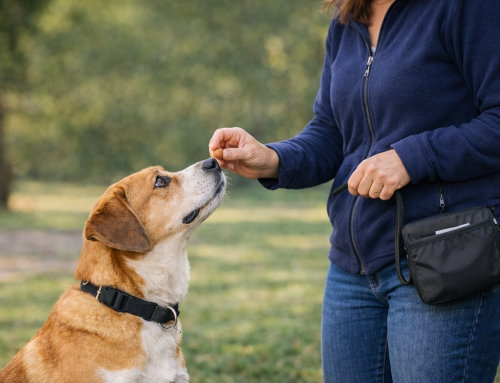
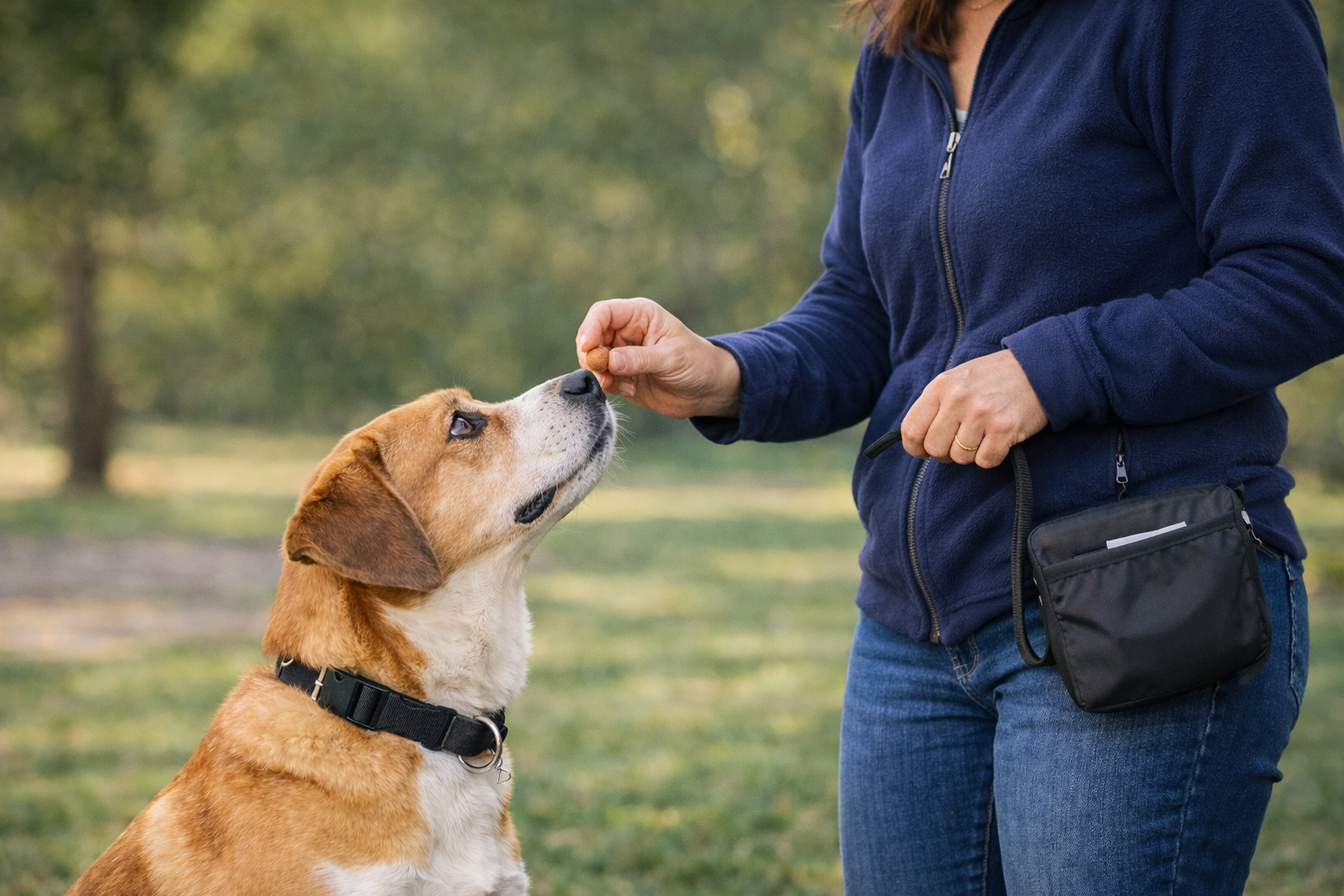
Start with a high-value treat.
Hold the treat right at your dog’s nose.
Then slowly move the treat toward your face.
When your dog looks up and makes eye contact:
mark the behavior and reward.
Keep it simple.
Keep it easy for the dog to succeed.
🐾 What “Mark the Behavior” Means
A marker is simply a word or sound that tells the dog:
“Yes — that’s exactly what I wanted.”
In clicker training, the click is the marker.
I personally use a verbal marker instead.
My marker word is:
“Thank you.”
Example:
Butt hits the ground → “thank you.”
That word tells the dog they did the correct behavior.
Then I release the dog to the reward.
🐾 The Release Cue
My release cue is usually:
“All done.”
I combine that with my hand dropping to the side where the treat is delivered.
This clearly tells the dog the exercise has ended.
🐾 A Small Trainer Trick: The 5-Second Pause
Here’s a small trick I often use with clients.
When I first start teaching this, I wait about five seconds between the marker and the release.
It looks like this:
Butt hits the ground
→ “thank you”
→ five-second pause
→ “all done”
→ reward
That tiny pause quietly teaches something important:
patience.
Without even realizing it, we’ve started building the foundation for a Stay.
🐾 Why I Often Combine Watch Me With Sit
When I teach Watch Me, the dog is almost always sitting.
That’s intentional.
A simple Sit means butt on the ground.
But Watch Me is more specific.
When I say Watch Me, I expect:
• butt on the ground
• attention on the handler
Think of it as:
Sit + attention
🐾 Puppies Learn This Faster
The best time to teach Watch Me is when your dog is still a puppy.
Young dogs are often described as a blank slate.
They don’t yet have strong habits competing with the new behavior you’re teaching.
If every dog owner started early and built these skills right away…
I’d probably be out of a job.
But fortunately for my business, most people don’t.
🐾 Older Dogs Can Learn Too
The good news is that older dogs can absolutely learn Watch Me.
It simply requires a little more patience from the owner.
Remember:
• start small
• reward even brief eye contact
• build slowly toward reliability
With consistency, the behavior will improve.
🐾 What Have We Learned?
• Watch Me should be one of the first cues you teach your dog
• it teaches your dog to redirect attention back to the handler
• later, cues like Leave It expand that skill
• tone matters — your dog should want to come back to you
• this command builds the foundation for calm, attentive behavior
The guiding principle remains simple:
Ignore the bad. Reward the good.
And as with all dog training:
Go slow. Be patient. Relax.
This one skill can become the cornerstone of a better relationship between you and your dog.



kool blog keep it up
sunny.
Anonymous ……. Hmmmmmmmmmmmm!
Just kidding, thanks for reading the blog and I hope it was helpful!
Mike