 What Dr. Ian Dunbar Taught Me About Reliability in Dog Training
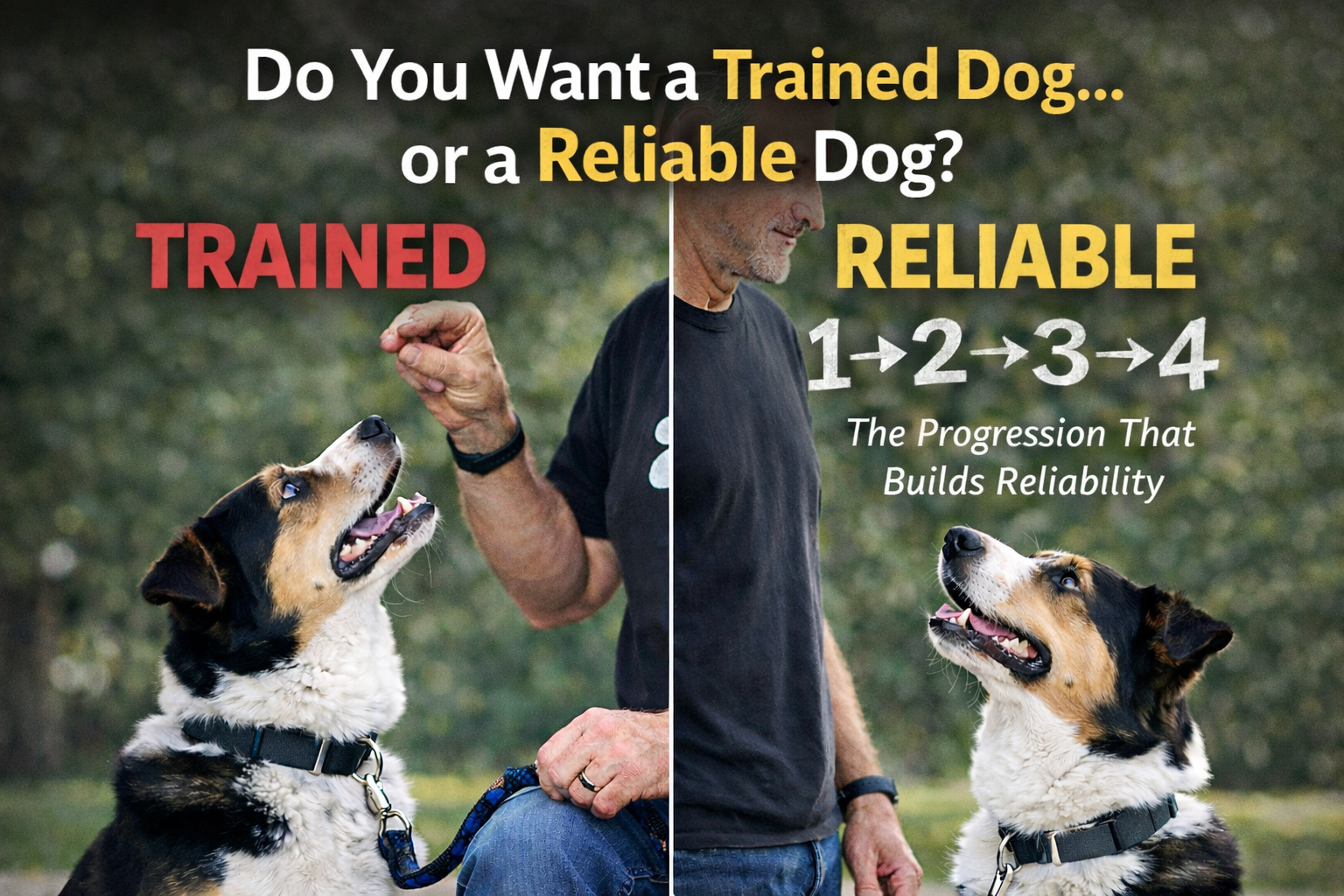
How to Make Your Dog More Reliable (Not Just Trained)
Let me tell you what hit me during a weekend seminar with Dr. Ian Dunbar.
I went in thinking I understood learning theory. I’ve got the psychology degree. I’ve studied Thorndike, Skinner, Pavlov. I knew the terminology. I knew the theories.
But somewhere around day three, I realized something.
Many people can train a dog effectively.
They can get the skills.
Sit works.
Down works.
Come works.
In the living room.
And for some people, that’s enough.
But there’s another group of owners who start asking a different question:
“Okay… I’ve got the skills. So why isn’t my dog better?”
And when they say “better,” what they really mean is reliable.
They don’t want a dog that sits sometimes.
They want a dog that responds when it matters.
Sometimes, when we focus on teaching skills — and we do it quickly — we forget about reliability.
And that’s what I believe Dunbar was really teaching that weekend.
🐾 The Part That Changed My Perspective
For years, I had learned learning theory as separate pieces.
Thorndike talked about consequences — behavior increases when it works and decreases when it doesn’t.
Skinner explained how reinforcement strengthens behavior.
Pavlov showed how associations make behavior automatic over time.
In college, they were presented almost like separate camps.
But sitting in that seminar, I realized something simple:
They weren’t describing competing ideas.
They were describing different phases of the same process.
Behavior starts with choices.
It strengthens with reinforcement or rewards.
And over time, it becomes reliable through association — and through experience in different environments, different situations, and increasing levels of distraction.
If you only ever practice in one place, you don’t build reliability.
You build comfort.
If you never move forward, you never get reliability.
That’s where Dunbar simplified everything.
🎯 1-2-3-4
Dr. Dunbar broke it down into something anyone could understand:
-
Cue
-
Lure
-
Behavior
-
Reward
You ask for the behavior.
You help the dog understand what you want.
The dog performs it.
You reinforce it.
Simple.
Let’s use “sit” as an example.
You say “sit.”
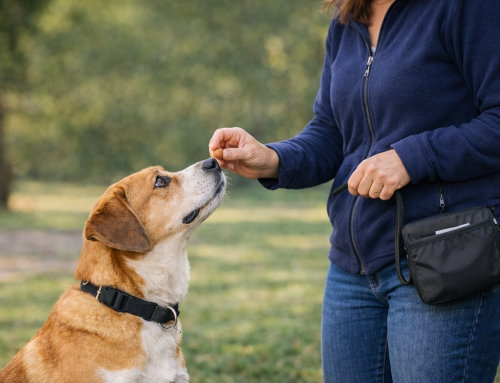
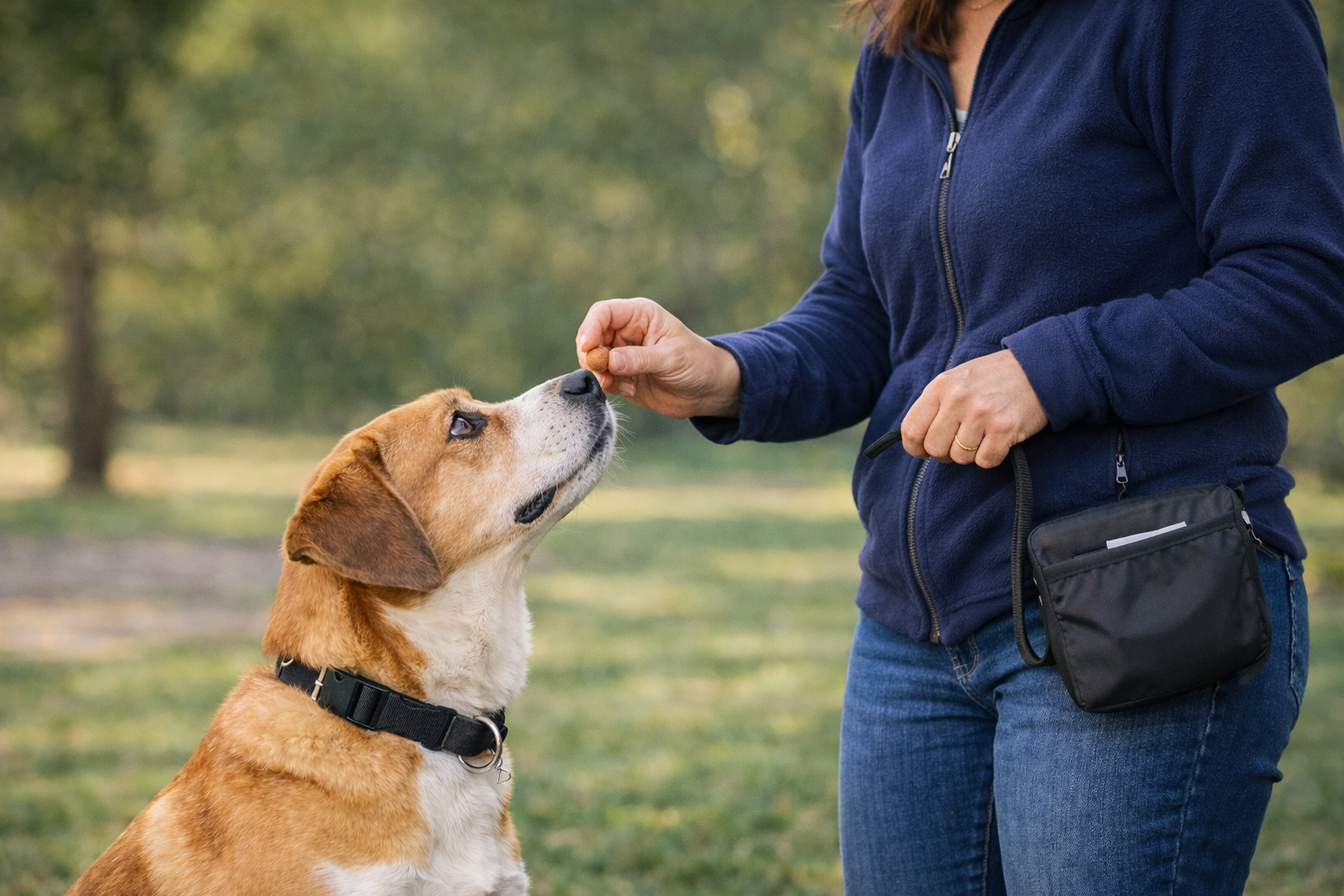
You move the treat over the dog’s head.
The rear hits the ground.
You reward.
That works.
But here’s where most people stop.
They keep showing the treat every time.
Or the dog refuses to sit unless the food appears first.
Now the dog isn’t responding to the word.
The dog is responding to the treat.
That’s not stubbornness.
That’s us stopping halfway through the process.
The treat was supposed to teach the behavior.
It was never meant to become a permanent requirement.
🧠 Where Reliability Is Built
In the beginning, you use all four steps.
Cue.
Lure.
Behavior.
Reward.
Then you start removing pieces.
You say “sit” without showing the food first.
The dog sits.
Sometimes there’s food.
Sometimes there’s praise.
Sometimes the reward is simply continuing life — going out the door, throwing the ball, greeting a friend.
Over time, the behavior stands on its own.
Not because the dog sees a treat.
But because the behavior has meaning.
That’s reliability.
📍 Kansas City Dog Owners: Why This Matters
If you’re working through obedience, leash pulling, or reliability struggles and wondering why the behavior falls apart once food isn’t visible, you’re not alone.
This is one of the most common issues I see as a dog trainer in Kansas City.
In-home dog training Kansas City families request most often revolves around one question:
“How do I get my dog to listen without depending on treats?”
The answer isn’t more food.
It’s progression.
If you’re looking for structured guidance that builds reliability step-by-step, you can learn more about working with a dog trainer in Kansas City here:
https://kissdogtraining.com/dog-trainer-kansas-city/
Winner – Best Dog Trainer in Johnson County (2023, 2025)
https://bojc2025.johnsoncountypost.com/pets/dog-trainer
🏁 The Real Takeaway
Thorndike wasn’t wrong.
Skinner wasn’t wrong.
Pavlov wasn’t wrong.
And Dunbar wasn’t inventing something new.
He was reminding us not to freeze the process halfway.
Use food.
Use rewards.
Teach clearly.
But don’t stop at step two.
Don’t let the lure become the requirement.
Don’t let the reward become the bribe.
If you want reliability, you have to move past just getting the behavior.
You have to finish the process.
Skills are easy.
Reliability is built.
And that difference is everything.



Leave A Comment
You must be logged in to post a comment.