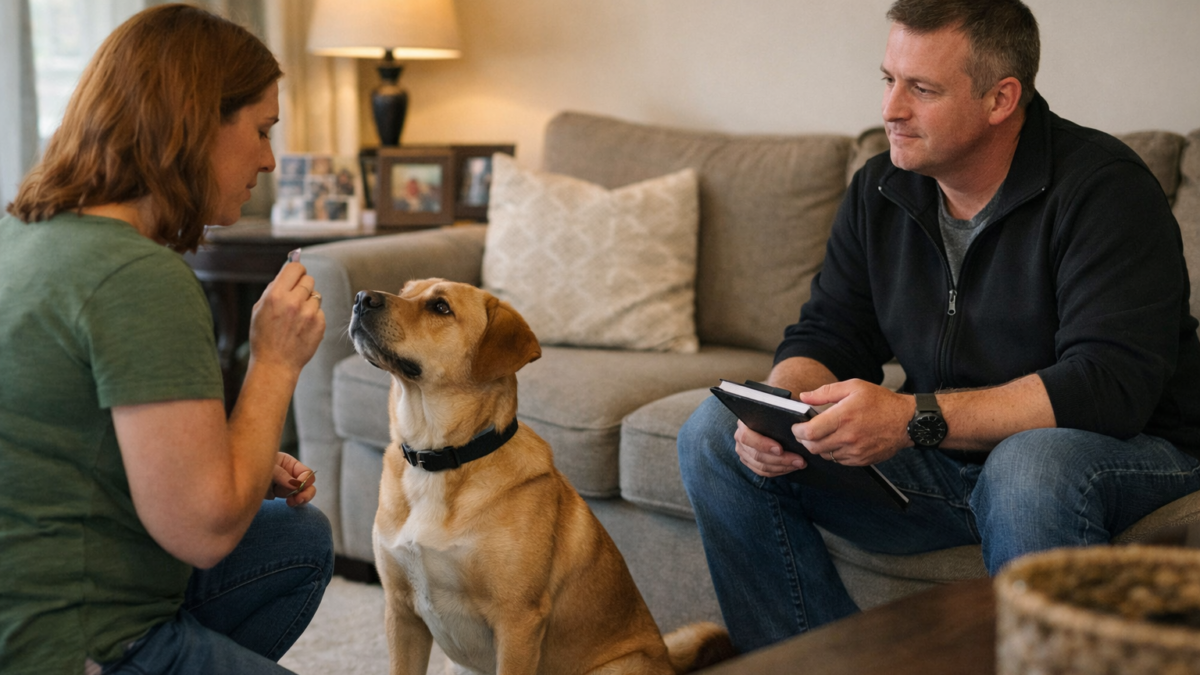
What Happens During a Real Dog Training Session (And Why It Works)
 What Happens During a Real Dog Training Session (And Why It Works)
Most people have a vague idea of what dog training looks like.
They picture commands, treats, maybe a leash correction, and a trainer telling the dog what to do while the owner watches from the sidelines. When that picture doesn’t match reality—or when progress doesn’t stick—frustration sets in fast.
The truth is, real in-home dog training sessions rarely look like what people expect.
They’re quieter.
They’re more methodical.
And they’re far more focused on the human side of the leash than most owners realize.
This article walks through what actually happens during a real in-home dog training session, why the order matters, and why meaningful behavior change doesn’t come from tricks, tools, or quick fixes.
Why People Call a Dog Trainer in the First Place
By the time someone schedules a session, they’re usually overwhelmed. They’ve read articles, watched videos, tried advice from friends, and maybe even worked with another trainer before.
The dog might be pulling on leash, barking at guests, reacting to other dogs, jumping, nipping, or ignoring cues that “used to work.”
What most owners don’t realize is that the behavior they’re worried about is rarely the actual problem.
It’s the symptom.
The real issue usually lives in routines, expectations, timing, reinforcement history, and inconsistent communication—things that aren’t obvious until an experienced dog trainer steps into the home and watches how life with the dog actually unfolds.
What a Professional Trainer Looks for First
Contrary to popular belief, a good trainer doesn’t start a session by “fixing” the dog.
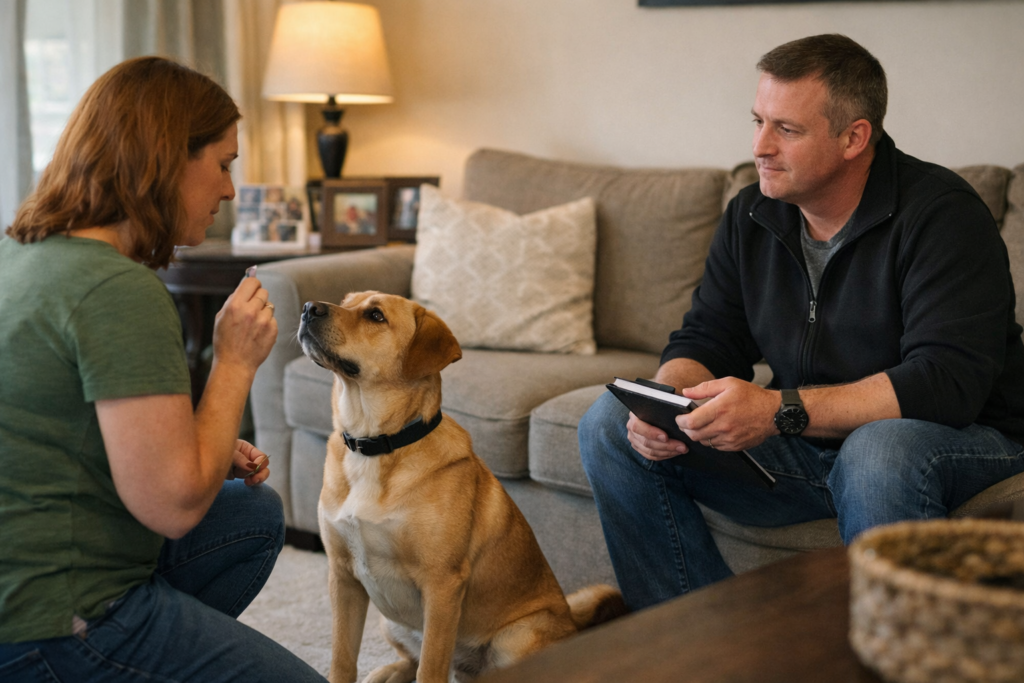
The first part of a real in-home dog training session is observation.
That means watching how the dog moves through the house, how the owner interacts, what happens during everyday moments, and how boundaries are—or aren’t—communicated.
The trainer is looking for patterns, not isolated incidents.
Questions come up quickly:
- What behaviors are being unintentionally rewarded?
- Where is the dog confused?
- How predictable is the household routine?
- What expectations does the owner think they’ve communicated versus what the dog has actually learned?
This stage often surprises people because it feels slow. But this is where the foundation is laid. Without it, any “training” that follows is temporary at best.
Why Order Matters More Than Techniques
One of the biggest reasons dog training fails is that people work on the right things in the wrong order.
Owners often want to jump straight to the problem behavior—barking, pulling, reactivity, jumping. But behavior doesn’t exist in a vacuum. It’s built on habits that came before it.
A real dog training session prioritizes:
- Clarity before control
- Structure before freedom
- Consistency before intensity
When those foundational pieces are corrected, the problem behavior often starts to soften on its own.
What Actually Changes During the Session
Many owners are shocked by how much progress happens during the session—not because the dog is suddenly “trained,” but because confusion is being removed in real time.
- Calmer movement through the home
- Quicker response to cues
- Reduced frantic behavior
- Better engagement with the handler
These changes aren’t magic. They’re the result of structure being introduced where chaos used to live.
Patterns That Show Up Again and Again
- Owners talk too much and reward too late
- Dogs are given freedom they haven’t earned yet
- Inconsistent rules create anxious behavior
- Exercise is used to mask confusion instead of solving it
- Tools are relied on instead of teaching
A good in-home dog trainer doesn’t shame these mistakes. They quietly correct them.
Why This Can’t Be Fixed With a Single Trick
Dogs don’t change because of collars, gadgets, or one clever technique. They change because their environment becomes predictable, their communication becomes clear, and the consequences of their choices make sense to them.
What Owners Should Expect After a Session
- Clear homework
- Realistic expectations
- Measurable goals
- A plan that fits real life
Why In-Home Training Makes the Difference
Dogs don’t misbehave in classrooms—they misbehave at home. That’s why effective training happens where the behavior lives.
Learn more about working with a professional dog trainer in Kansas City:
https://kissdogtraining.com/dog-trainer-kansas-city/
The Real Goal of Dog Training
The goal isn’t obedience for obedience’s sake. It’s clarity, calm, and confidence—for both dogs and their owners.
Contact KISS Dog Training:
https://kissdogtraining.com/contact/
Books & Training Resources:
https://kissdogtraining.com/merchandise/