


Why Does My Dog Burp in My Face? When It’s Normal — and When to Worry
Your dog climbs onto the couch, leans toward your face, and lets out a burp.
It can be funny, unpleasant, or concerning—especially if it starts happening more often. The useful question is whether you are noticing an occasional burp or a change in your dog’s normal behavior.
At K.I.S.S. Dog Training, I help Kansas City families understand their dogs and build better everyday routines. That includes looking at what happens around meals and what owners can teach. But when the concern involves your dog’s health, the professional you need is your veterinarian.
Why Do Dogs Burp?
Burping releases gas from the stomach through the mouth. Swallowing air while eating or drinking can contribute, especially when a dog gulps down a meal.
An occasional burp and a dog who otherwise seems comfortable are a different situation from frequent burping accompanied by discomfort or other changes.
Rather than focusing only on the noise, pay attention to the pattern:
- Does it usually happen after eating or drinking?
- Has it become more frequent?
- Did you recently change food, treats, or feeding routines?
- Have appetite, energy, or bathroom habits changed?
- Does your dog seem uncomfortable?
Those observations give your veterinarian more useful information than simply saying, “My dog burps.”
Why Does My Dog Burp Right in My Face?
The location may have more to do with where your dog is standing than why the burp happened.
A dog who gets close to your face may happen to burp while there. That does not establish that the dog planned it, is being disrespectful, or has figured out a new way to annoy you.
If your dog seems uncomfortable or suddenly starts seeking unusual amounts of reassurance, include that change in your conversation with the veterinarian.
When Should Burping Concern You?
Changes matter. If burping becomes frequent or occurs alongside vomiting, diarrhea, reduced appetite, weight loss, or discomfort, contact your veterinarian.
Speaking as someone who has lost a dog to bloat, I also want owners to recognize signs of a possible emergency.
Repeated attempts to vomit without bringing anything up, a swollen or painful abdomen, heavy drooling, unusual restlessness, weakness, or collapse warrant immediate veterinary attention. Do not wait for every sign to appear.
Cornell University’s veterinary college provides information about bloat, or gastric dilatation-volvulus (GDV), including warning signs and risk factors. Large, deep-chested dogs are at greater risk, although other dogs can be affected.
Burping alone does not diagnose bloat. It also should not be used as proof that a dog showing distress is fine.
What Does the Research Say About Eating Too Fast?
Fast eating appears in veterinary discussions of bloat risk, but research findings are mixed. That means we should avoid turning “slow down your dog’s eating” into a promise that a particular bowl or feeding method will prevent bloat.
The research review on eating speed and GDV explains those limitations.
The best thing to do whenever you are looking at research online is to consult a professional. In this case, that professional is your veterinarian. We are here to provide basic information; follow up with the experts to determine what applies to your dog.
That includes questions about slow feeders, meal size, feeding frequency, and your dog’s individual risk factors.
Mealtime Can Also Be Training Time
Once medical concerns have been addressed, feeding routines give us something practical to work on.
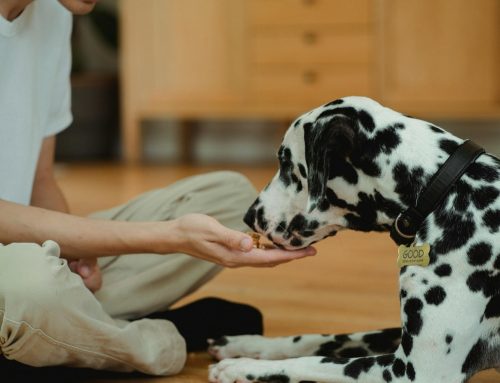
In my work as a Kansas City dog trainer, I use hand-feeding to help owners build attention and teach their dogs that working with them is worthwhile.
Instead of every meal disappearing from a bowl, some of that daily food can become rewards for checking in, responding to a cue, or practicing an appropriate behavior.
You are already going to feed the dog. Why not use part of that routine to teach?
My article on building attention through hand-feeding explains that foundation and how it develops into other skills.
The purpose here is to teach attention and better choices. Your veterinarian should guide decisions about digestive symptoms and medical feeding needs.
Know When You Need the Vet—and When Training Can Help
Observe the pattern, take changes seriously, and ask your veterinarian about health concerns.
If you are in the Kansas City area and need help with feeding routines or attention, tell me what’s going on through the Contact Us form.
For more basic background on the original question, you can also read Dogster’s article about why dogs burp in your face.










Leave A Comment
You must be logged in to post a comment.